Free OnlineAI Haute Couture Design
How to Create Haute Couture Design with AI
Establish the Couture Brief
Define Silhouette and Materials
Build Embellishment and Presentation
Review, Iterate, and Export
Couture Decisions You Can See Before the Atelier
Sculpt a Distinct Silhouette
Haute couture starts with a point of view, not a generic dress. Direct a corseted column, sculpted peplum, bias-cut gown, cocoon coat, split-leg skirt, or exaggerated sleeve together with proportion, balance, and movement so the concept communicates a deliberate couture silhouette.
Make Fabric and Drape Legible
Tell the AI design tool how the material should catch light, fold, pool, float, or hold a sharp edge. Contrast satin sheen with matte crepe, sheer tulle with velvet, or liquid jersey with structured faille so the visual concept supports a clear material story without claiming tested fabric performance.
Plan Embroidery and Surface Work
Place beadwork, sequins, lace, feathers, appliqué, hand-painted effects, quilting, or sculpted floral work where it strengthens the silhouette. An AI couture design generator can explore a surface direction, but the atelier still needs to test weight, attachment, repeat, durability, and handwork technique.
Compose Runway and Editorial Views
Create a runway gown image, atelier presentation board, close-up of couture embroidery, or high-fashion editorial portrait with a chosen camera angle, lighting system, and negative space. Keep the view aligned with the purpose: collection review, press image, client pitch, portfolio, or campaign planning.
Develop Cohesive Collection Variations
Use one design language to compare colorways, lengths, neckline changes, day-to-evening adaptations, or a small couture capsule. Ask for consistent styling and presentation so a moodboard or collection review shows a family of looks instead of unrelated one-off images.
Refine Details in Conversation
Use Chat Edit when a drape loses its direction, a train becomes heavy, embroidery overwhelms the bodice, a sleeve changes shape, or a fabric reads incorrectly. Free AI credits after signup let you test alternatives and export watermark-free PNG or JPG visuals for the next design conversation.
How to Prompt an AI Haute Couture Generator
- Build the silhouette: Name the garment, proportion, neckline, bodice, waist, skirt or trouser volume, train, sleeve shape, closures, and wearer instead of saying only “luxury dress.”
- Describe material behavior: Use fabric and movement cues such as duchess satin with a crisp fold, silk faille with body, liquid jersey with bias drape, organza with transparency, or velvet with directional nap. Treat the result as a visual hypothesis, not a laboratory test.
- Map the handwork: State whether beadwork, sequins, feathers, lace, appliqué, embroidery, quilting, or sculpted flowers belong at the neckline, bodice, sleeve, hem, train, or one focal panel, and how dense the treatment should feel.
- Choose the presentation: Ask for a fashion sketch, atelier board, runway image, editorial portrait, detail crop, or couture moodboard. Specify camera height, crop, lighting, background, model styling, and whether the result is for a review, pitch, portfolio, or campaign.
AI Haute Couture Prompts for Six Fashion Directions
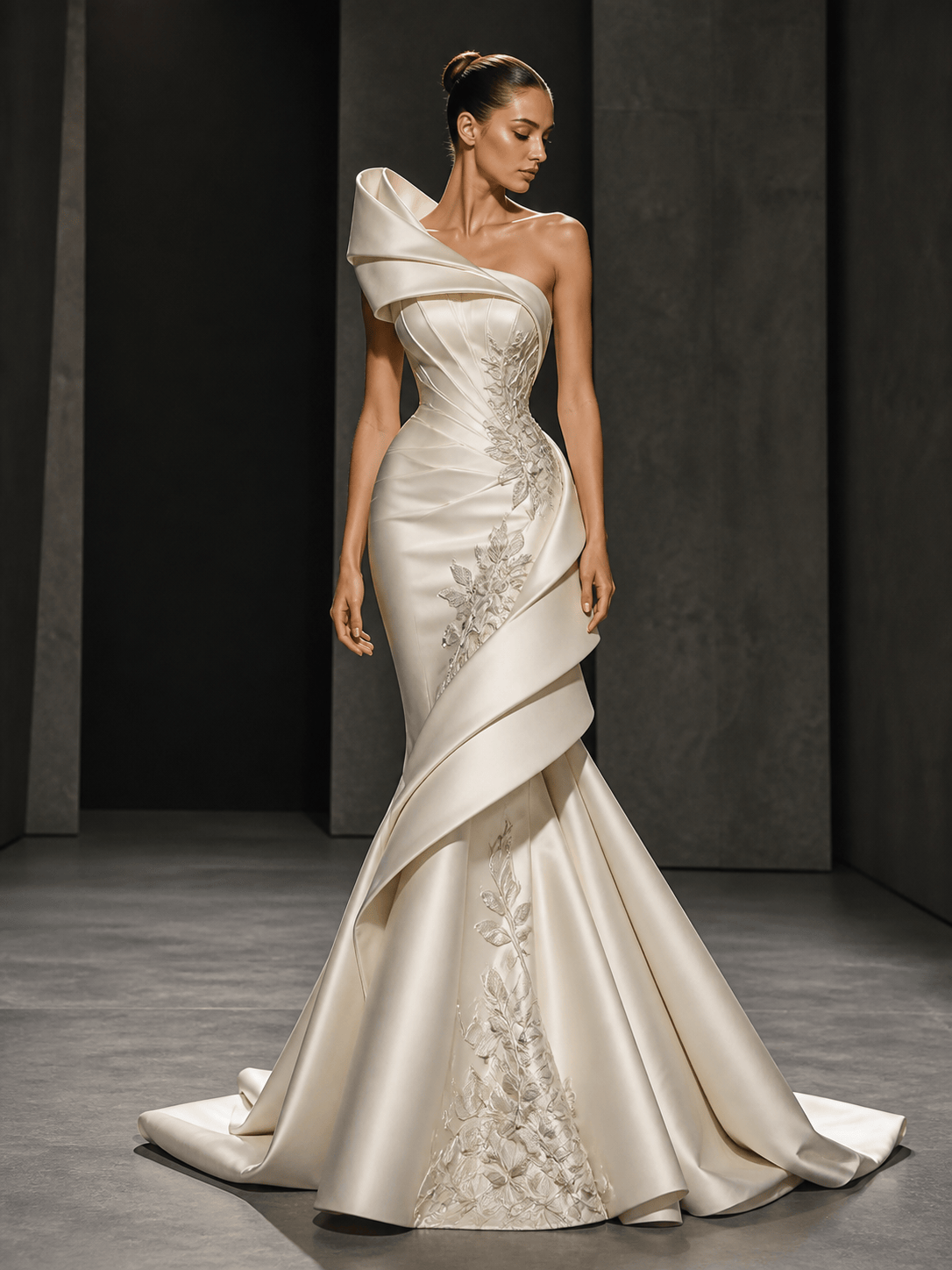
Couture evening gown: Design a sculptural ivory evening gown with an asymmetrical folded bodice, internal corset lines, a narrow waist, and a sweeping spiral train. Use duchess satin with controlled highlights, subtle tonal appliqué, and a single line of crystal-like embroidery along the fold. Show a full-length runway image on a neutral architectural set, elegant posture, no text or logos.
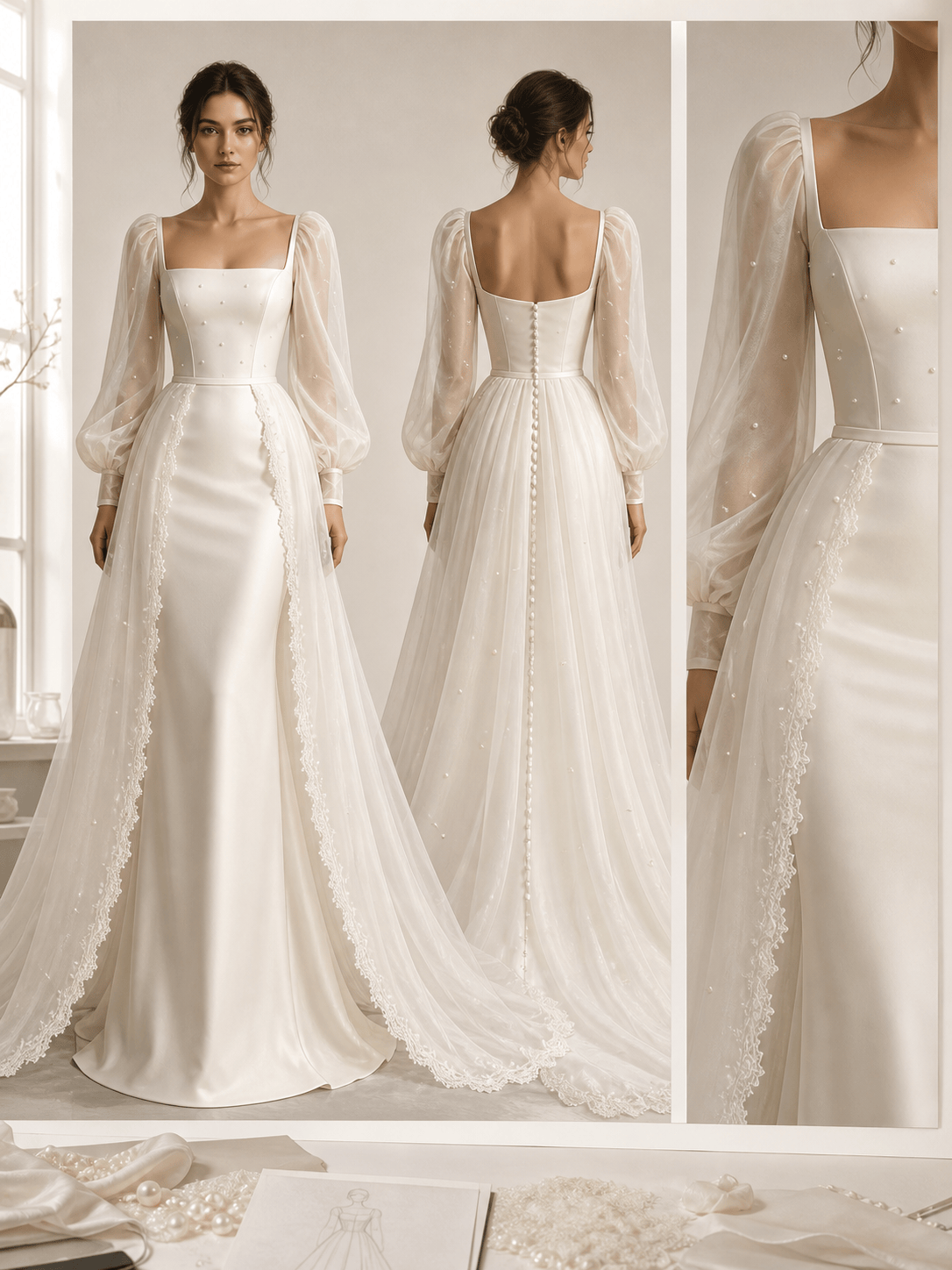
Couture bridal concept: Create a modern bridal couture look with a structured square-neck bodice, detachable overskirt, translucent silk-organza sleeves, and a clean column underlayer. Palette: warm ivory, pearl, and a trace of pale silver. Show an atelier presentation board with front, back, and detail views; keep seams and proportions coherent, no brand marks.
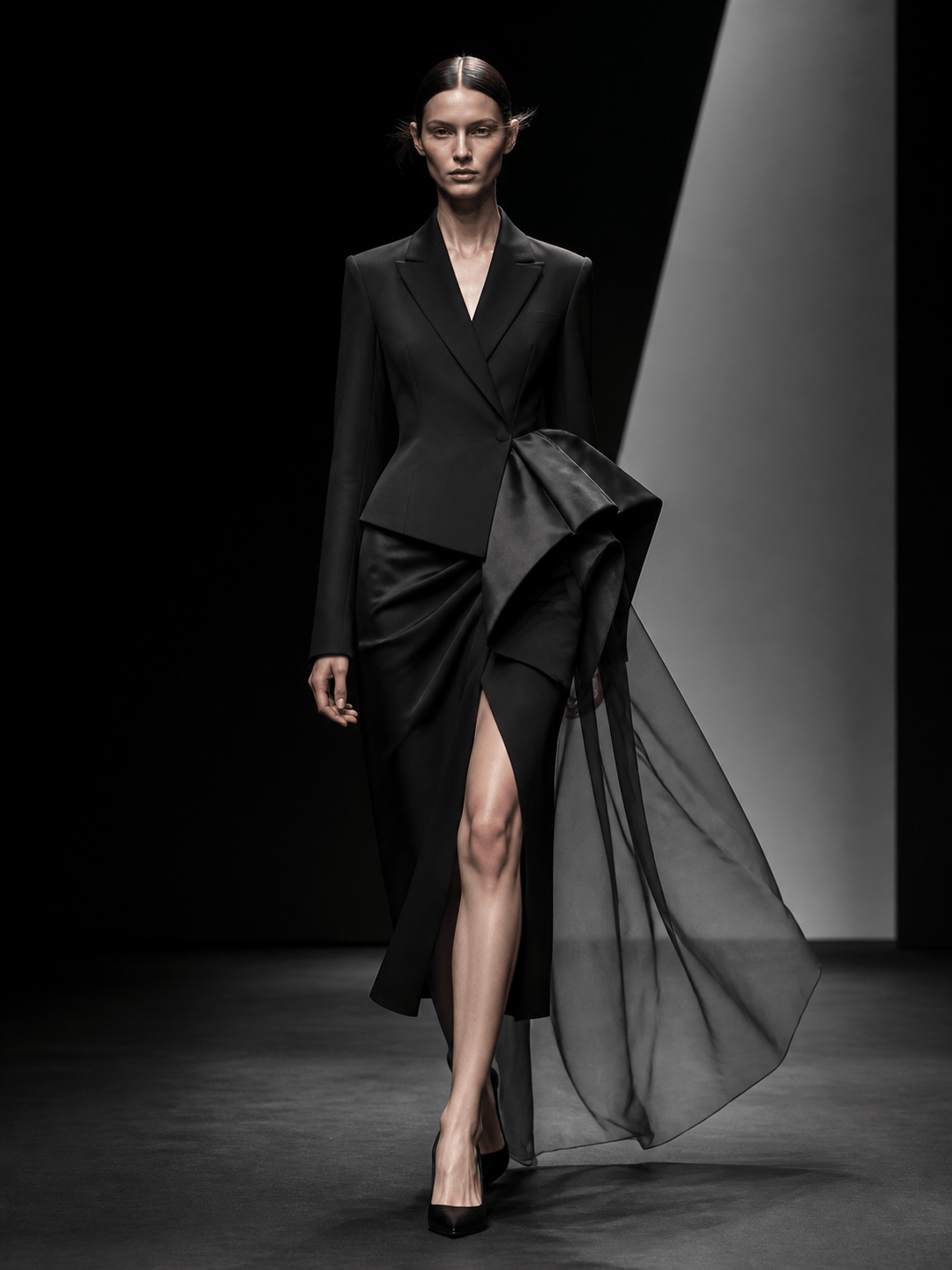
Avant-garde runway look: Generate a high-fashion black look built from a sharply tailored asymmetric jacket, sculptural hip volume, and a split skirt with a floating translucent panel. Use matte wool, lacquered satin, and sheer organza in controlled contrast. Show a dramatic runway three-quarter view with intentional negative space, no words or logos.
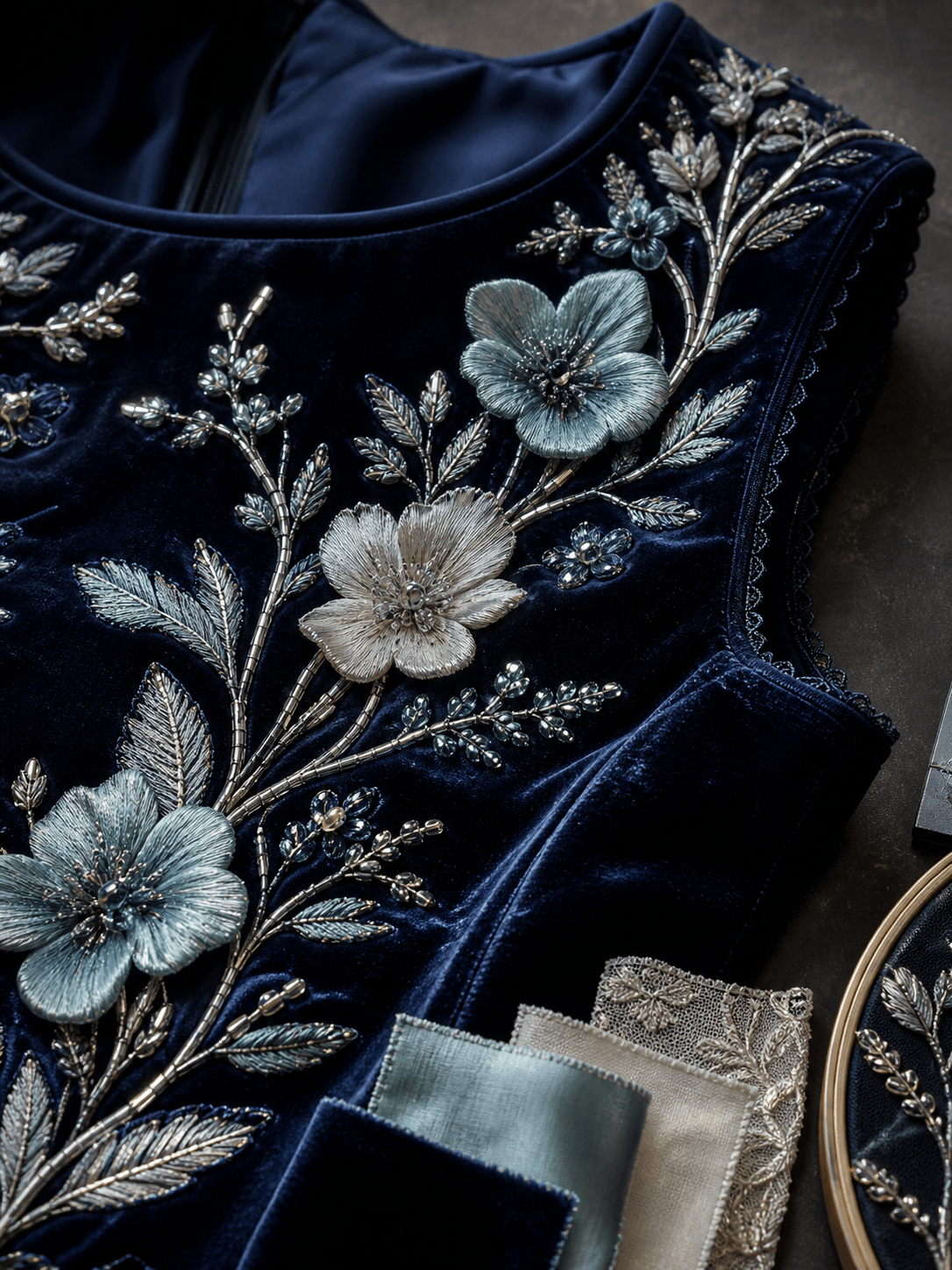
Couture embroidery detail: Create a close-up design study of a midnight-blue velvet bodice with botanical embroidery, dimensional petals, glass-bead highlights, and fine metallic couching. Include a small adjacent material swatch strip and a clean atelier background; keep the embellishment legible and original, with no readable text or trademarked motifs.
Couture moodboard: Build a refined capsule moodboard for a coastal winter couture collection. Combine three coordinated looks, fabric swatches, a shell-inspired sculptural detail, icy blue, sand, and ink palettes, and restrained editorial photography. Keep the board organized, premium, and free of brand names or filler text.
Couture lookbook image: Style an emerald silk faille gown with a fitted draped bodice, long gloves, and a controlled mermaid hem on an adult model in a quiet gallery. Use soft museum lighting, full-length editorial framing, realistic fabric weight, and a clean background suitable for a client pitch; no text, logos, or extra jewelry.