Free OnlineAI Deconstructivist Fashion
How to Create Deconstructivist Fashion with AI
Name the Garment and Tension
Add Sketches, Materials, and References
Generate and Compare Avant-Garde Directions
Refine the Construction and Export
Why Use Mew Design for AI Deconstructivist Fashion Design
Translate Construction into Visual Language
Describe what is normally hidden—seam tape, lining, darts, plackets, closures, and hems—and turn those construction cues into a legible deconstructivist fashion concept.
Sketch-to-Garment Concept Exploration
Use this online AI deconstructivist fashion designer to transform a sketch, garment photo, or moodboard into rendered avant-garde clothing while preserving the key silhouette you want to test.
Control Asymmetry and Proportion
Explore offset closures, displaced pockets, exaggerated sleeves, uneven hems, layered tailoring, and modular panels without redrawing every variation.
Material and Colorway Studies
Compare washed canvas, suiting wool, bonded jersey, sheer organza, recycled denim, raw knit, monochrome black, or one oxide accent as visual design directions.
Runway, Flat-Lay, and Editorial Views
Build a deconstructivist capsule collection with coordinated front, side, detail, flat-lay, and model views for a portfolio, client pitch, or fashion moodboard. Treat model images as references, not fit-accurate try-on results.
Fast Conversational Edits and Exports
Refine a first draft with Chat Edit, then export PNG or JPG. Mew Design can draw on Nano Banana Pro and GPT Image 2.5 when the concept needs another visual direction.
How to Write a Strong AI Deconstructivist Fashion Prompt
- Choose the base archetype: Start with a trench, blazer, slip dress, knit, uniform, denim jacket, or workwear piece so the disruption has a recognizable structure.
- State what is deconstructed: Mention exposed seams, visible lining, displaced closures, unfinished hems, spliced panels, reassembled sleeves, inside-out details, or modular layers.
- Balance the palette and material: Pair a restrained base with one accent and describe how wool, canvas, jersey, organza, denim, knit, or recycled fabric should look. Do not claim a generated image proves performance or sustainability.
- Direct the final presentation: Ask for runway, editorial, flat-lay, detail, or model views and state whether the concept is for a portfolio, capsule review, pitch, or moodboard. Proofread any supplied text.
AI Deconstructivist Fashion Prompts for Runway, Workwear, and Capsules
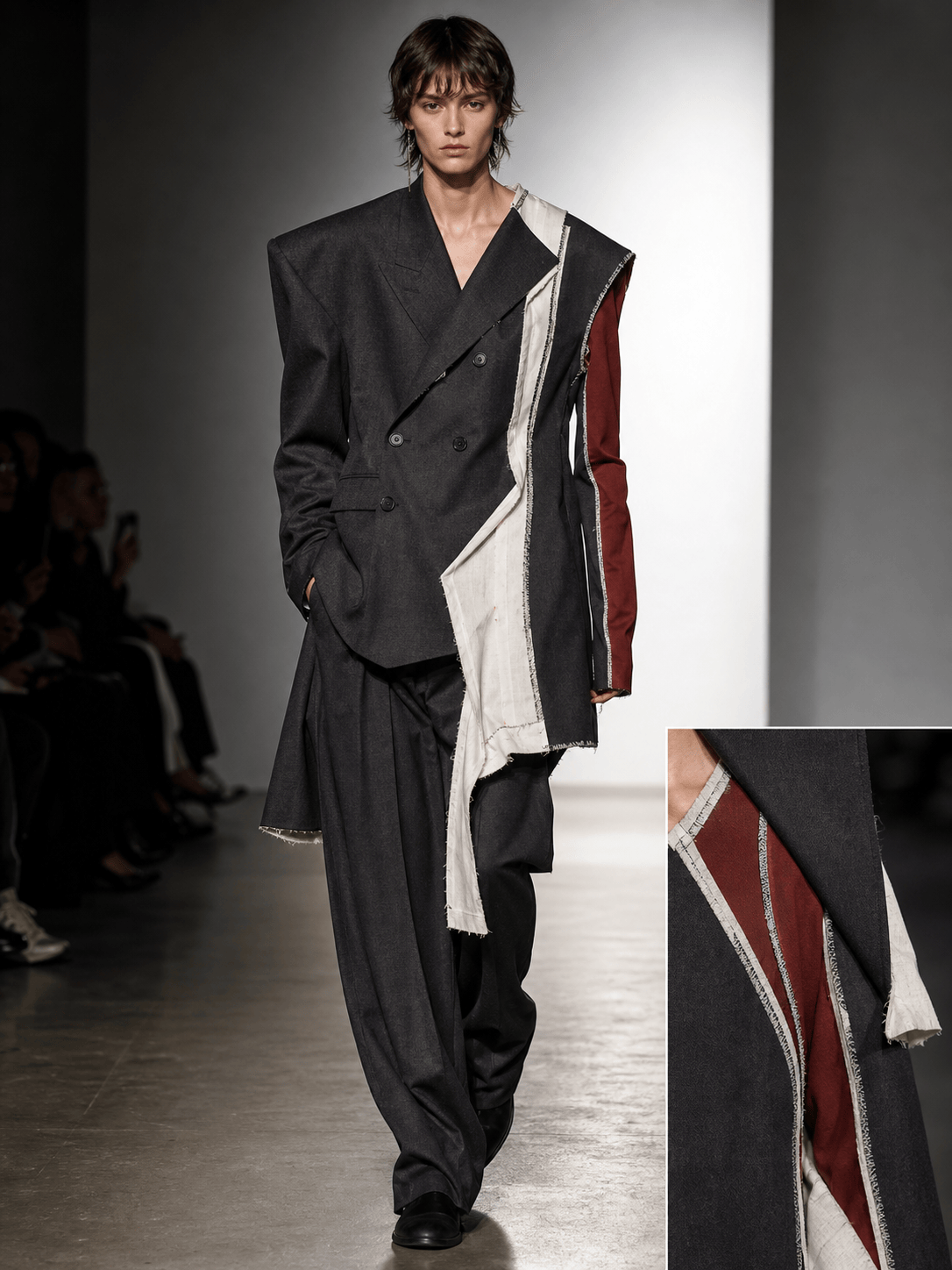
Deconstruct a classic black wool blazer into an avant-garde runway jacket: offset double-breasted closure, exposed white lining, seam tape, one sharp shoulder, elongated raw hem panel, charcoal with one oxide-red insert, front and three-quarter views, no logo or text.
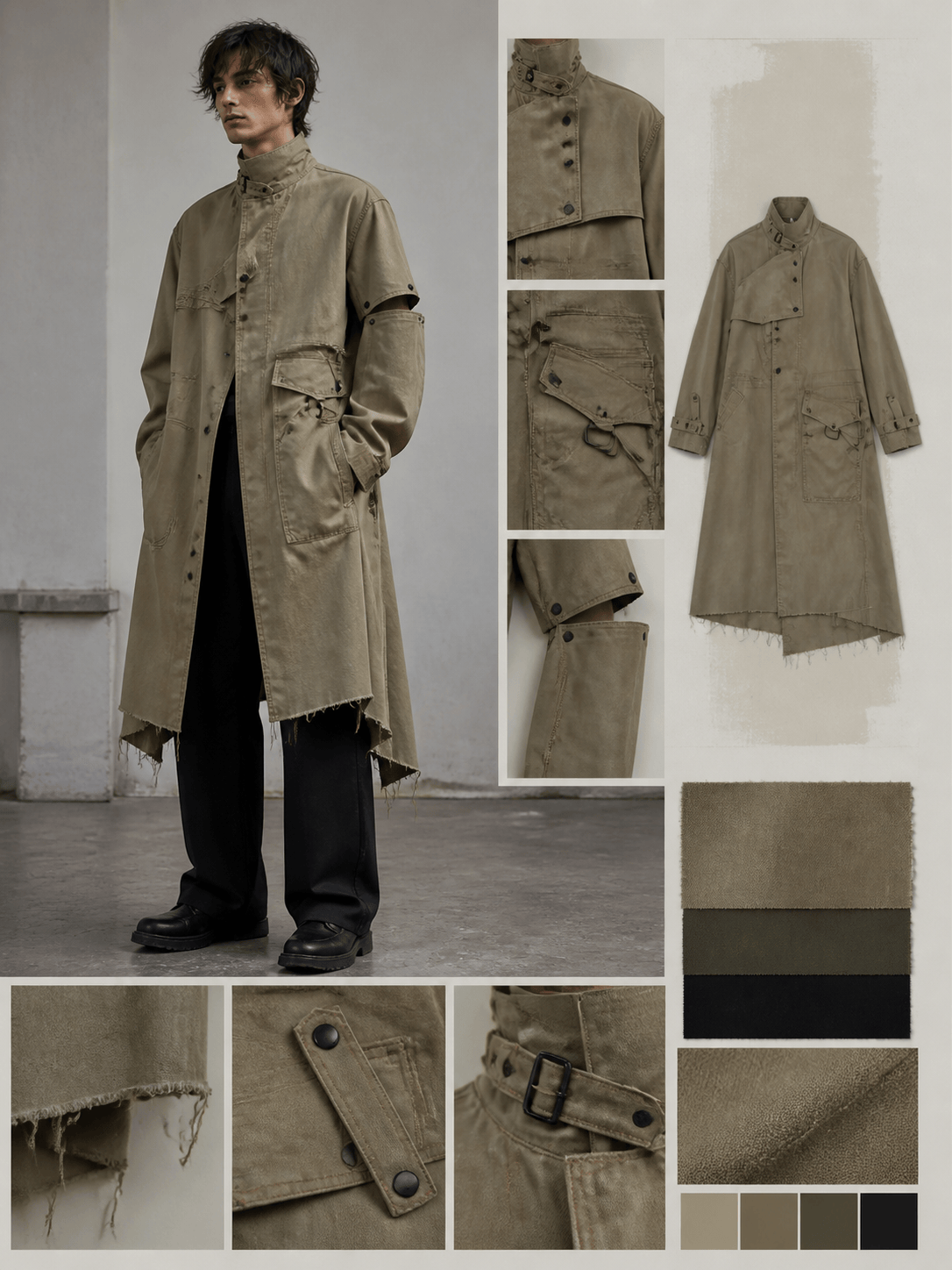
Create a deconstructed workwear trench from washed khaki cotton: split storm flap, displaced pockets, visible topstitching, detachable sleeve panel, uneven hem, matte black hardware, industrial studio light, front and back garment board.
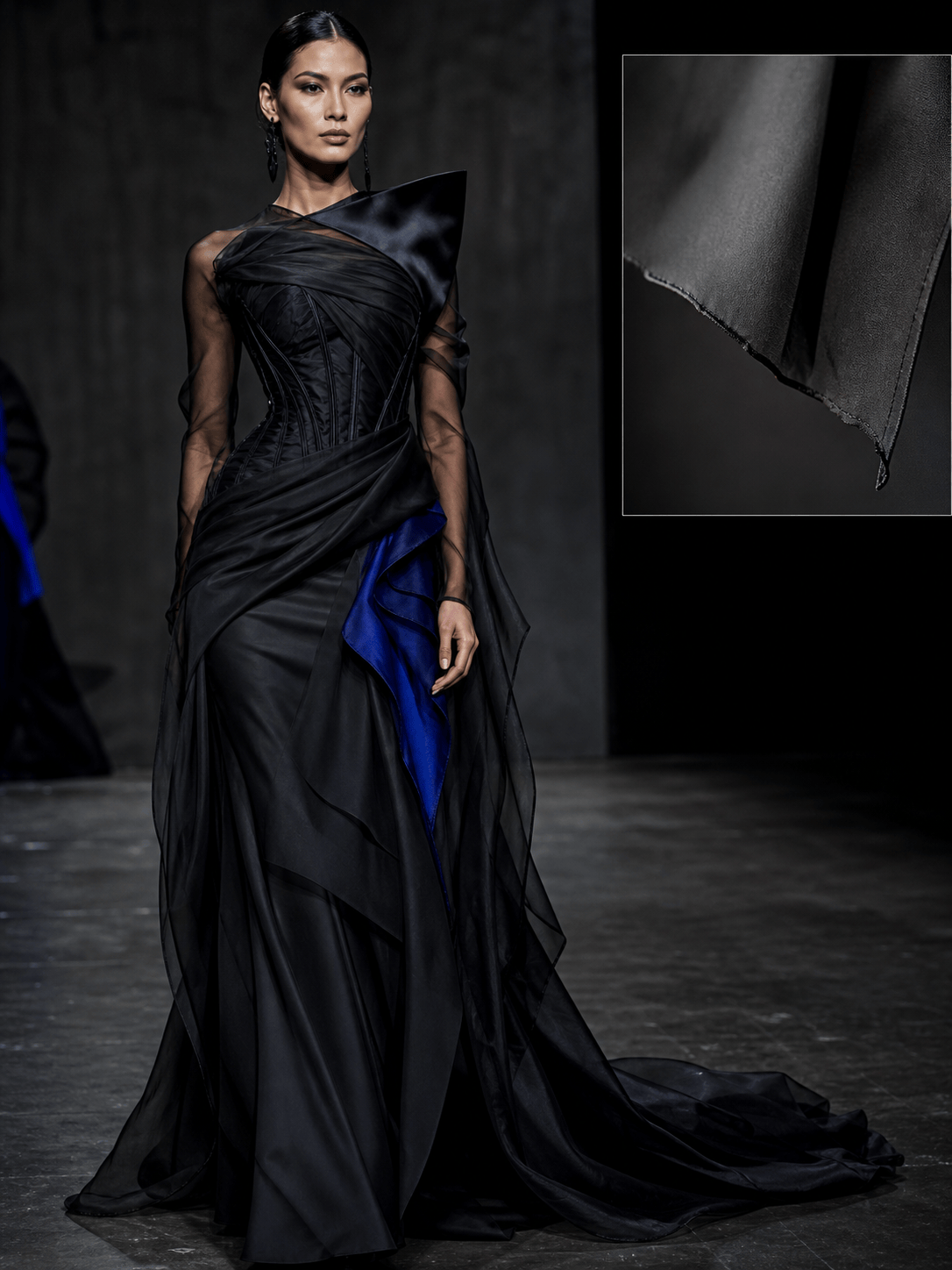
Design an asymmetric evening dress from black satin and sheer organza: one structured shoulder, diagonal drape, visible boning channel as decoration, unfinished organza edge, sculptural train, dark runway setting, polished model view.
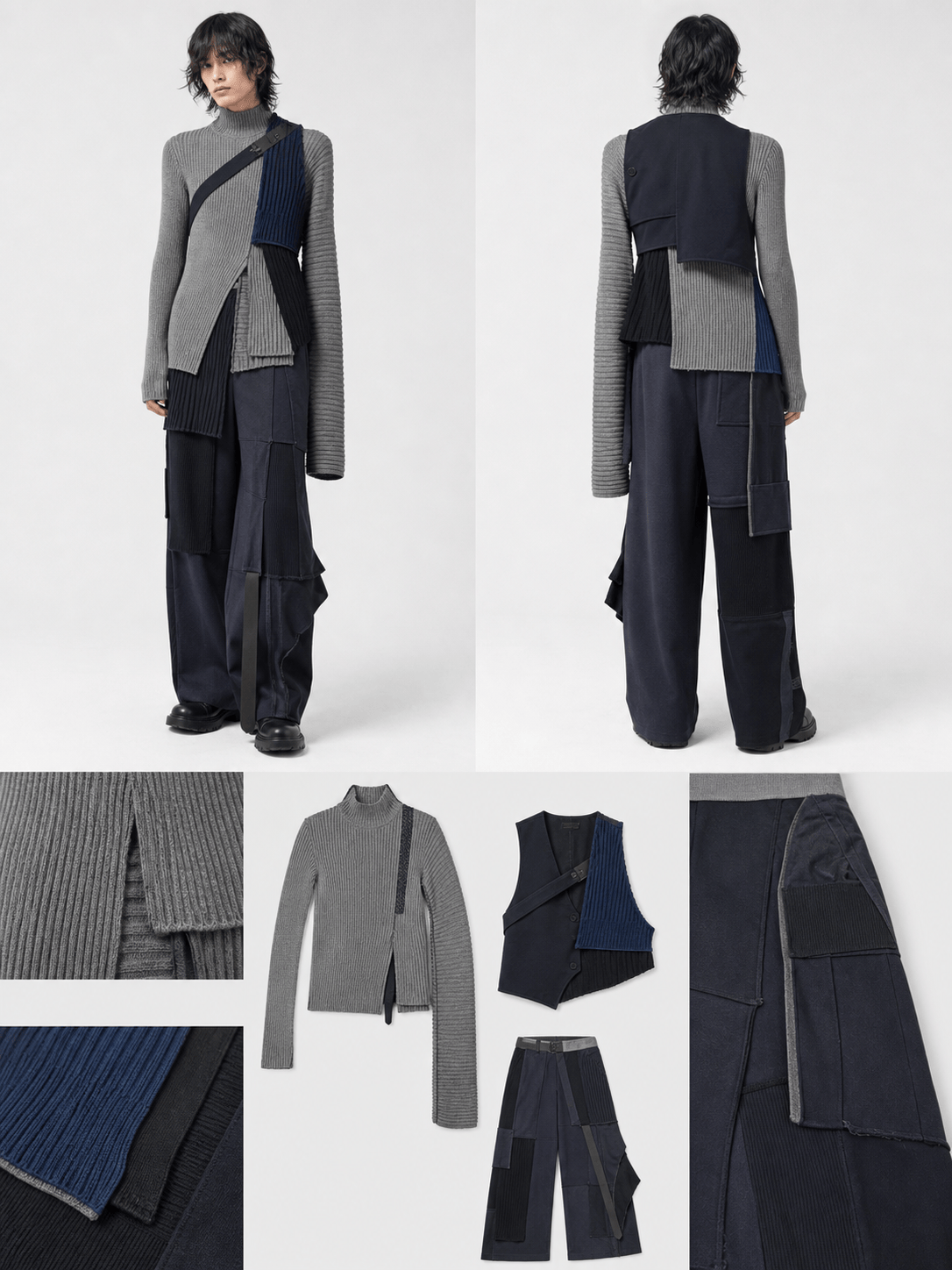
Generate a deconstructed knit look for a gender-fluid capsule: modular ribbed sweater, one elongated sleeve, split side seam, layered knit panels, soft gray, ink, and one cobalt accent, clean editorial model and flat-lay views.
Turn a denim trucker jacket into reconstructed avant-garde streetwear: two mismatched collars, inside-out pocket bags, raw frayed hem, panel splicing, faded indigo with ecru canvas, concrete backdrop, full-body editorial image.
Transform this fashion sketch into a coherent deconstructivist capsule. Preserve the off-center closure and asymmetric hem, develop three coordinated garments with exposed construction, restrained monochrome materials, one accent color, and a clean presentation board.