Free OnlineAI Textile Design Generator
How to Create Textile Designs with AI
Start with the Fabric and End Use
Define Motifs, Rhythm, and Color
Generate and Compare Textile Directions
Refine, Test, and Prepare the Handoff
Textile Concepts That Work Beyond a Single Swatch
Brief the Product, Not Just the Pattern
Mew Design can interpret whether the artwork is meant for a blouse, scarf, swimsuit, nursery bedding, or large sofa. That context helps shape motif scale, density, direction, contrast, and how much detail the textile concept needs.
Develop from Your Own Visual References
Upload a motif sketch, palette, moodboard, swatch, or garment image that you own or may use. Explain whether it should guide subject, brushwork, color, or layout, and the AI fabric design generator can build a new direction without treating the reference as something to copy exactly.
Explore Prints and Coordinating Colorways
Turn one approved idea into a hero print, a lower-density coordinate, and seasonal color alternatives. Keep the motif family recognizable while testing warmer, cooler, tonal, high-contrast, or limited-palette versions for a more coherent textile collection.
Judge Scale in a Product Context
A square swatch can hide scale problems. Ask this AI textile design mockup workflow to show the same artwork on a shirt, dress, cushion, curtain, or chair, then compare small, medium, and oversized placements before ordering a physical sample.
Correct Visible Rhythm Through Chat
Click Chat Edit to break an accidental stripe, rotate repeated motifs, open negative space, soften a background, reduce color count, or create a second presentation view. Targeted revisions let you protect the strongest parts instead of restarting the design.
Export Clean Concepts with an Honest Handoff
Start with free AI credits after signup and export approved PNG or JPG visuals without a watermark. Use them for moodboards, portfolios, buyer reviews, or concept presentations; a textile technician and manufacturer should still verify repeat joins, scale, separations, color, substrate, and production files.
How to Brief AI Like a Textile Designer
- Build a Motif Hierarchy: Name one or two hero motifs, secondary shapes, and small fillers. Describe their relative size, rotation, overlap, and negative space so the design does not become a uniform scatter of equally loud objects.
- Specify the Repeat Behavior: Choose block, tossed, half-drop, brick, mirror, directional, or non-directional. Ask for edge-to-edge artwork, natural wrapping on all four sides, no frame, and no single centered illustration when a repeat is required.
- Control Scale, Density, and Color: State tiny, medium, or oversized motifs; airy, balanced, or packed spacing; and a limited palette or exact color direction. Request related colorways only after the motif structure is working.
- Request the Right Proof Views: Ask for a flat tile, a 3×3 repeat check, and a product mockup at believable scale. Exclude text, logos, protected prints, unintended borders, obvious tracks, duplicated clusters, signatures, and watermarks.
Textile Design Prompts for Fashion and Interiors
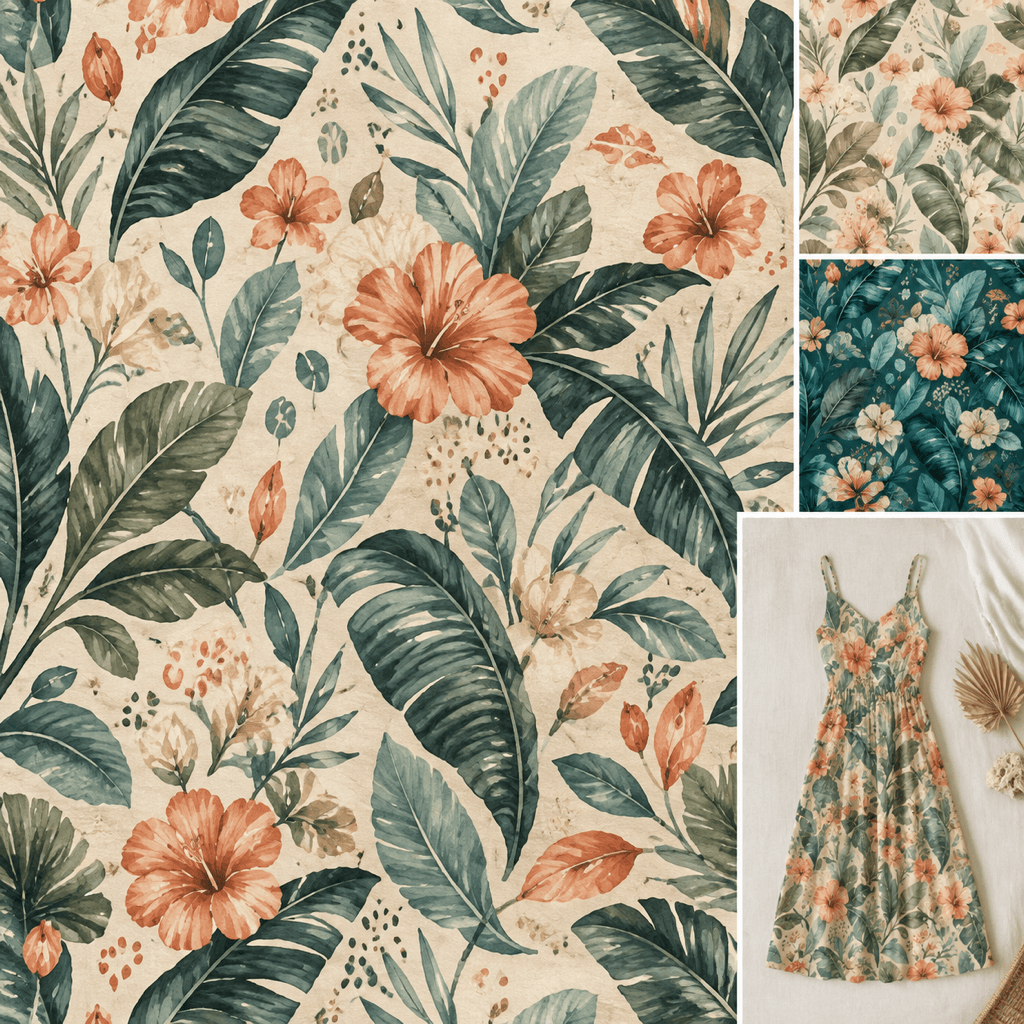
Resort Linen Floral: Create a seamless square print for a relaxed linen dress with original abstract tropical flowers, fan palms, curling leaves, and tiny seed pods. Tossed half-drop, medium-large scale, airy density, ocean teal, clay coral, apricot, leaf green, and warm cream; dry gouache texture, invisible edge joins, no text, logo, copied motif, signature, or watermark. Show a flat tile, 3×3 repeat, and small dress mockup.
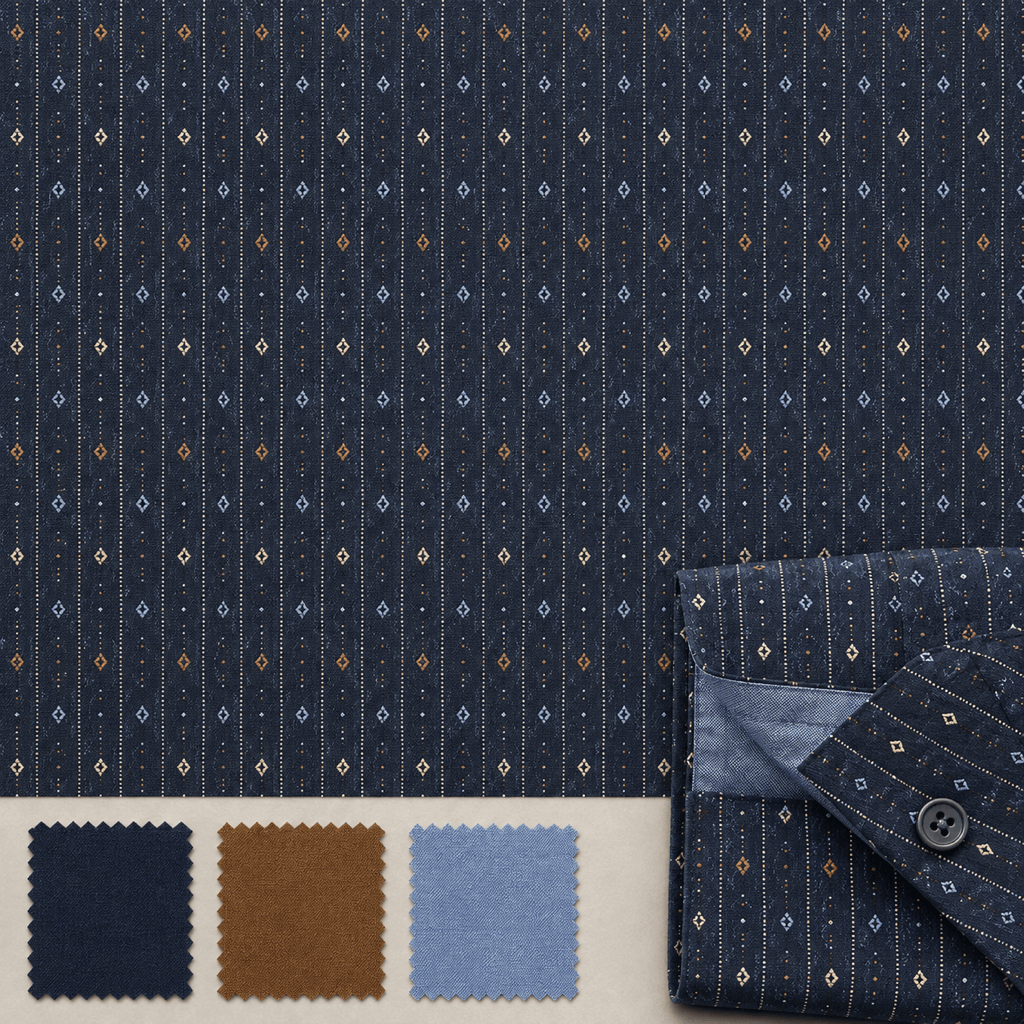
Modern Menswear Shirting: Design a refined geometric fabric repeat for cotton poplin using interlocking arches, offset diamonds, and short bars. Small scale, half-drop rhythm, crisp flat shapes, indigo, tobacco, pale blue, and ivory, enough negative space to read from arm's length. Two-way layout for easier cutting; no monogram, letters, brand mark, visible seam, moiré, signature, or watermark. Include shirt-pocket scale preview.
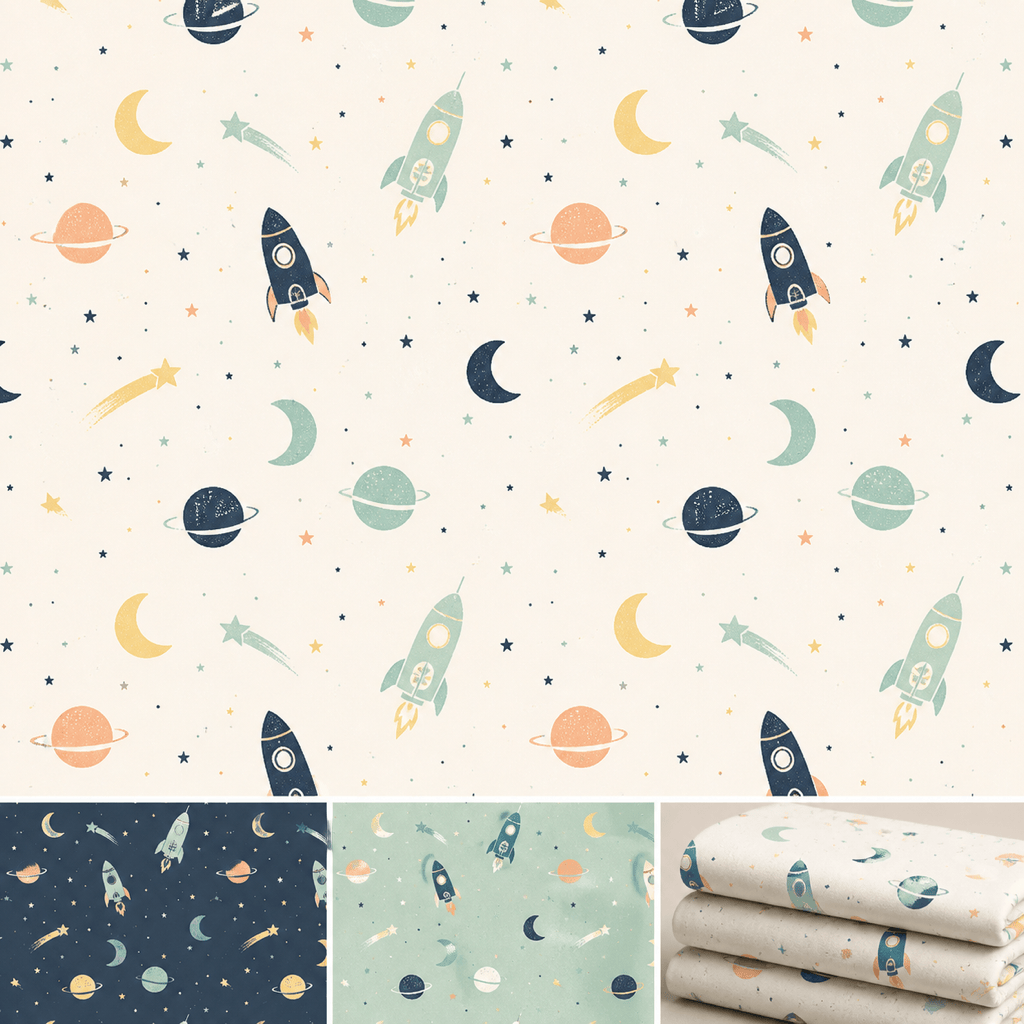
Original Space Pajama Print: Make a small-scale tossed textile pattern for children's pajamas with friendly original rockets, crescent moons, comets, ringed planets, and tiny stars. Rounded paper-cut shapes, soft navy, sky blue, mustard, coral, and cream, balanced spacing and varied rotation. No known characters, faces, words, sharp weapons, obvious rows, signature, or watermark. Show the repeat on a simple pajama set concept.
Activewear Engineered Placement: Create a non-repeating print direction for a women's running top and leggings. Use flowing contour bands that begin dark at the side seams and open into electric coral and cobalt near the calves and shoulders, with subtle topographic dots. Keep major lines away from crotch and bust seams, front/back placement board, no logo, slogan, body text, impossible seam match, signature, or watermark.
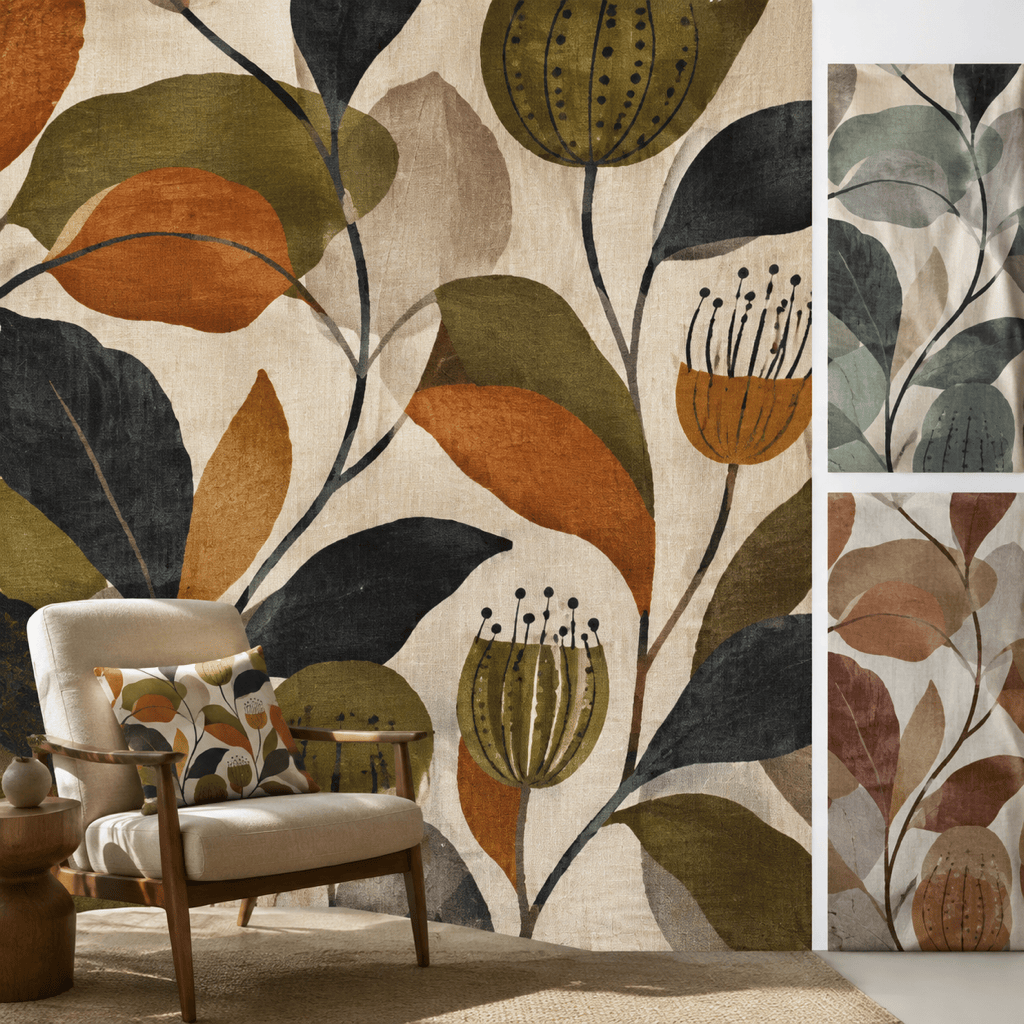
Large-Scale Upholstery Botanical: Design an oversized botanical repeat for a woven-look armchair and cushions. Sculptural leaves, seed pods, and curved stems in olive, rust, ochre, ink blue, and oatmeal; block-print texture, medium contrast, generous breathing room, half-drop rhythm with no vertical tracking. No flowers copied from a known print, text, logo, hard tile border, signature, or watermark. Show flat swatch and room-scale mockup.
Silk Scarf Border Composition: Create a square scarf textile design with an original central field of fine wind-drawn grasses, a narrow geometric inner frame, and a wider abstract wave border. Deep plum, oxidized teal, saffron, blush, and ivory; elegant screen-print look, balanced corners, clear fold behavior. No brand monogram, letters, copied luxury motif, human figure, signature, or watermark. Present flat and softly draped views.
Print-on-Demand Mini Collection: Develop three coordinating surface designs for tote bags and notebooks: a hero pattern with abstract citrus and leaves, a quiet two-color dot-and-line coordinate, and a small stripe. Share a warm cream, citron, forest, and terracotta palette with consistent hand-cut paper texture. Each design should stand alone, avoid copied artwork, and contain no text, logo, border, signature, or watermark. Show equal-scale swatches and two product mockups.
Reference-Led Colorway Study: Use my permitted floral sketch as the motif source while preserving its loose ink contour and asymmetrical flower shapes. Rebuild it as an original medium-scale tossed repeat, then create three colorways: midnight garden, sun-washed clay, and muted winter blue. Do not trace unrelated background marks or add new species. Show flat swatches and one blouse mockup; no text, logo, visible repeat line, signature, or watermark.