Free OnlineAI Fractal Generator
How to Create Fractal Art with AI
Define the Recursive Structure
Generate a Focused Composition
Tune Density, Color, and Depth
Export for the Final Format
Why Mew Design Works for Fractal Art Exploration
Describe Patterns in Plain Language
Turn phrases such as “recursive coral reef,” “nested triangular lattice,” or “electric spiral coastline” into a visual direction without learning formulas or node-based software.
Control More Than the Color Palette
A strong fractal image needs hierarchy. Specify repetition scale, branch density, symmetry, focal point, edge detail, and negative space so complexity supports the composition.
Explore 2D and 3D-Looking Styles
Use this 3D fractal generator AI workflow to explore crystalline tunnels, metallic Mandelbulb-inspired sculptures, flat geometric prints, organic systems, or luminous cosmic fields.
Guide the Result with References
Upload a reference image or color study when you want related rhythm, lighting, material, or palette. Mew Design uses it as visual guidance while creating a new composition.
Refine the Pattern Through Chat
The first version is a starting point. Use Chat Edit to simplify crowded regions, strengthen self-similar motifs, move the focal spiral, reduce bloom, or create alternate color directions.
Make Art for Real Destinations
The free AI fractal generator online can create vertical, square, or wide variations for wall art, music artwork, web backgrounds, packaging concepts, and custom fractal wallpapers.
What Makes an Effective AI Fractal Art Prompt
- Describe the Structure: Choose spirals, branches, nested polygons, tessellations, cellular forms, coastlines, ferns, crystals, or Mandelbrot-inspired boundaries. Mention symmetry or intentional asymmetry.
- Set Scale and Complexity: Ask for large readable forms with fine recursive detail, a sparse pattern with negative space, or dense microstructure limited to the focal region.
- Direct Color and Material: Name a controlled palette and rendering language such as ink, vector geometry, stained glass, metallic 3D, bioluminescent organic matter, or matte paper.
- State the Destination and Limits: Add phone wallpaper, desktop background, poster, album cover, textile, or web banner. Exclude unwanted text, logos, faces, borders, muddy gradients, or excessive glow.
Fractal Art Prompts for Distinct Visual Directions
Create a psychedelic fractal concert poster background built from concentric recursive waves. Use fluorescent magenta, acid green, ultraviolet, and black, with one strong central vortex, crisp screen-print texture, open space for event typography, and no existing text or logos.
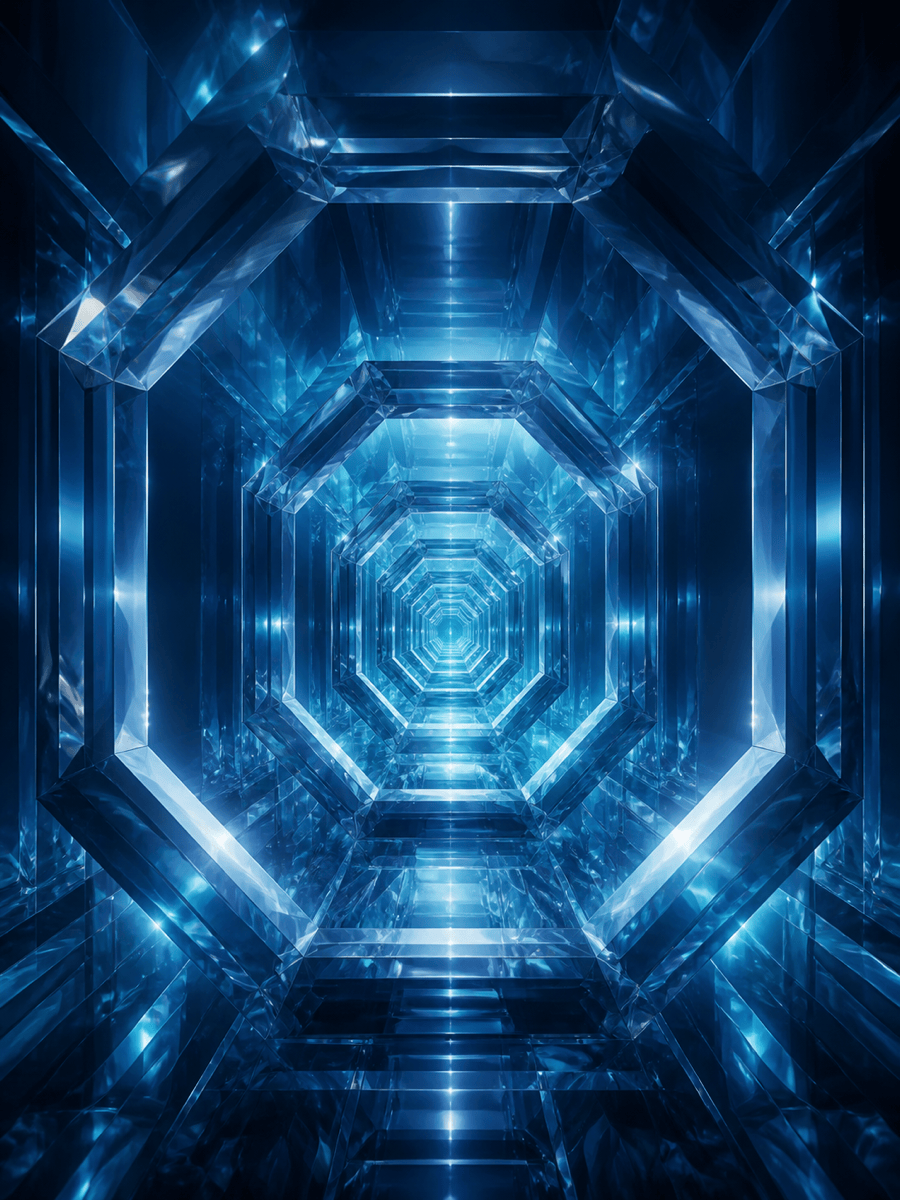
Generate a cinematic 3D fractal tunnel for an ambient electronic album cover. Form the tunnel from repeating translucent crystal chambers, each smaller chamber visible inside the next. Use deep navy, cyan, and silver light, a centered vanishing point, realistic reflections, and controlled bloom.
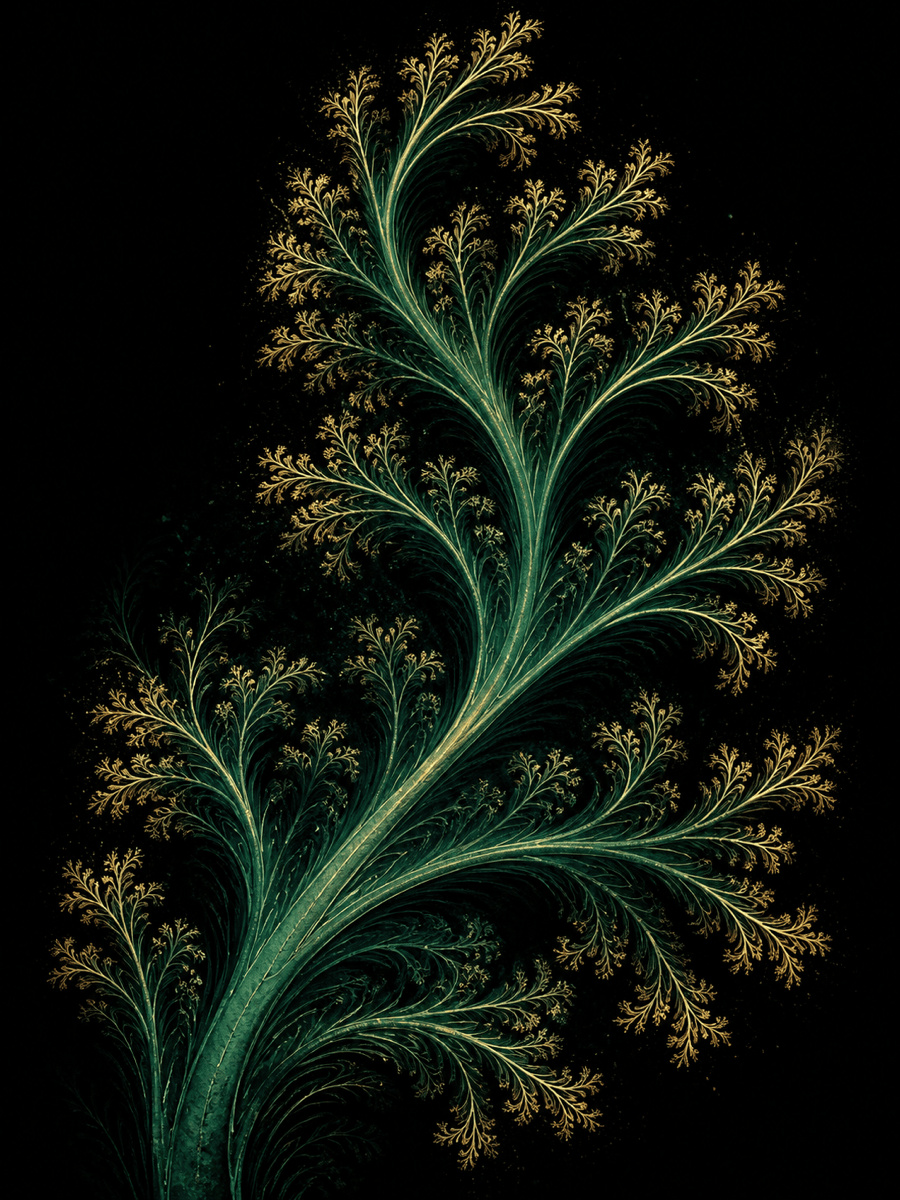
Create botanical fractal art inspired by fern fronds and river deltas. Let emerald branches divide into finer gold-tipped branches while preserving an elegant asymmetrical flow. Use a black background, delicate line detail, calm museum-print styling, and no text.
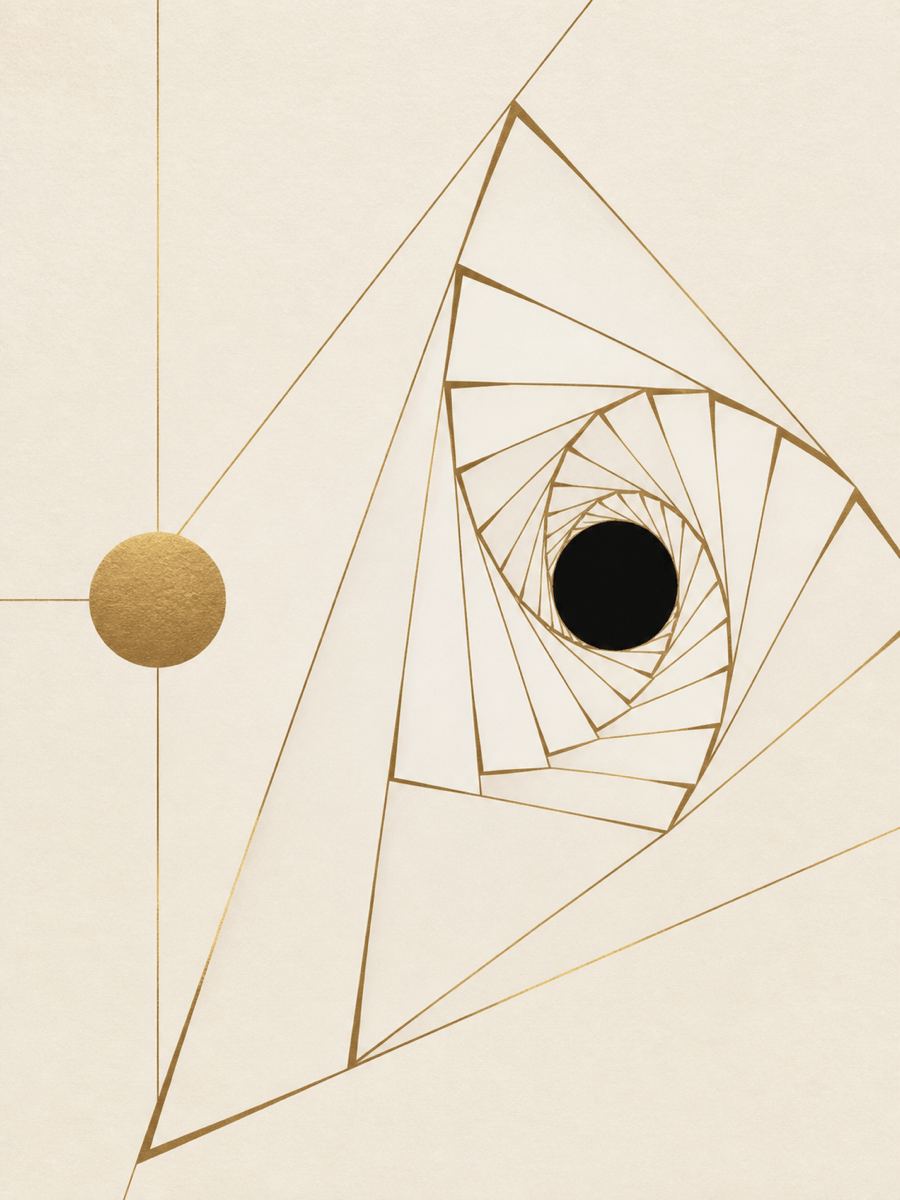
Design a minimalist geometric fractal poster with nested ivory triangles, thin metallic-gold lines, and one offset black void. Keep most of the composition quiet, use precise spacing and a matte paper texture, and avoid neon colors or decorative clutter.
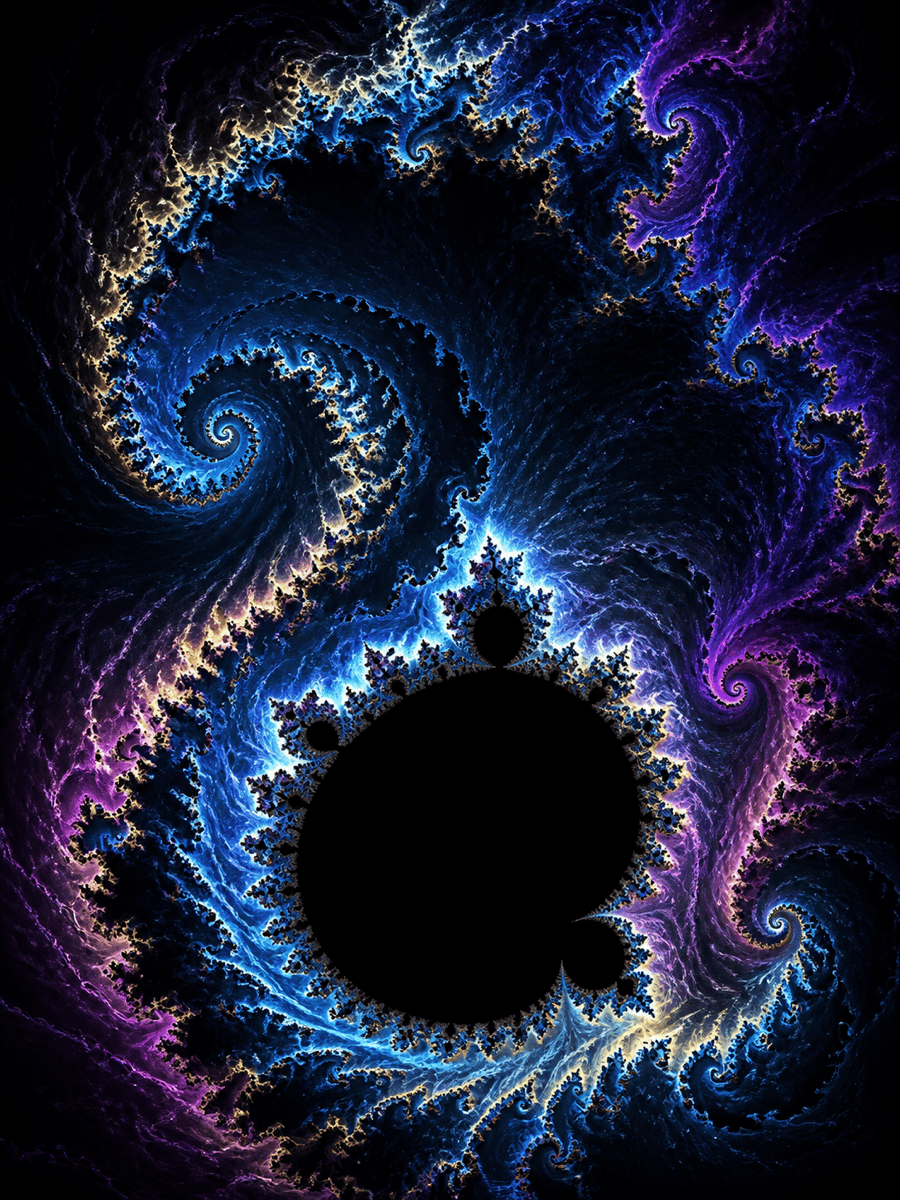
Make a vertical fractal wallpaper for a phone. Create a deep cosmic spiral whose arms contain smaller star-filled spirals, using midnight blue, violet, and restrained turquoise. Keep the brightest detail away from the top clock area and avoid text, planets, or people.
Create a Mandelbrot-inspired abstract coastline for a widescreen desktop background. Emphasize self-similar bays and curling tendrils rather than an exact scientific plot. Use obsidian, burnt orange, pale gold, and teal, with sharp edges, subtle depth, and a clean dark area for desktop icons.