32 AI Instagram Lookbook Photo Prompts to Copy and Customize
Turn one outfit photo into a studio-style collage of your favorite poses. These AI Instagram lookbook photo prompts cover six-pose grids, seven-pose collages and eight-pose fashion edits, plus wearable style variations. Choose an example, upload your own photo and try it in our AI lookbook generator.
AI-generated style examples. Upload your own photo to personalize a look.
32 Instagram Lookbook Prompts, From Classic Grids to Outfit Remixes
Start with the white-background multi-pose formats seen in recent lookbook tutorials, then explore our original streetwear, tailoring and occasionwear remixes. Every card includes a prompt and an AI-generated example. The examples use fictional adult models; they demonstrate the composition rather than a verified identity match. To keep your current clothes, replace the outfit sentence with “Keep the complete outfit from my reference photo unchanged.”
Black Evening Dress Editorial
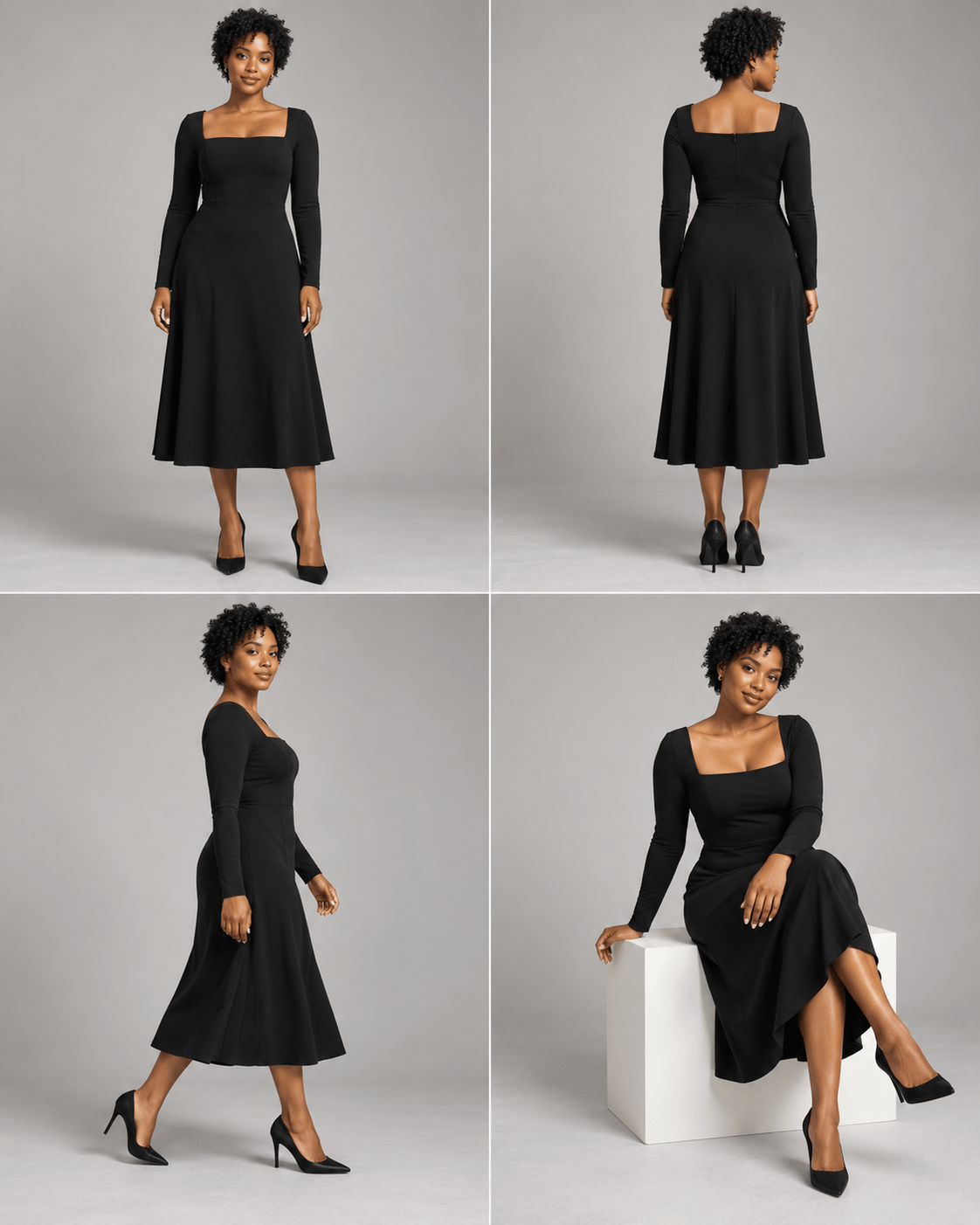
Create one photorealistic Instagram lookbook photo featuring four views of the same adult person. If I upload a reference photo, use it for facial identity, hairstyle, skin tone, age and natural body proportions. Otherwise use an adult woman with deep brown skin and short natural curls. Outfit for this version: a black long-sleeve midi dress with a square neckline and simple black heels. Keep this exact outfit, footwear and accessories consistent in every view. Arrange four views in 2 columns and 2 rows, on a pearl grey studio background. Poses, in reading order: front standing; back view; side step; seated on a white cube. Show fabric drape and dress construction clearly; understated elegant expressions. Use soft editorial lighting, realistic contact shadows, natural skin and clear fabric detail. Keep every full-body figure visible from head to toe, with no collisions, extra limbs or duplicate poses. Output one 4:5 image, not separate files. No captions, text, logos or watermark.
Satin Midi Dress Movement
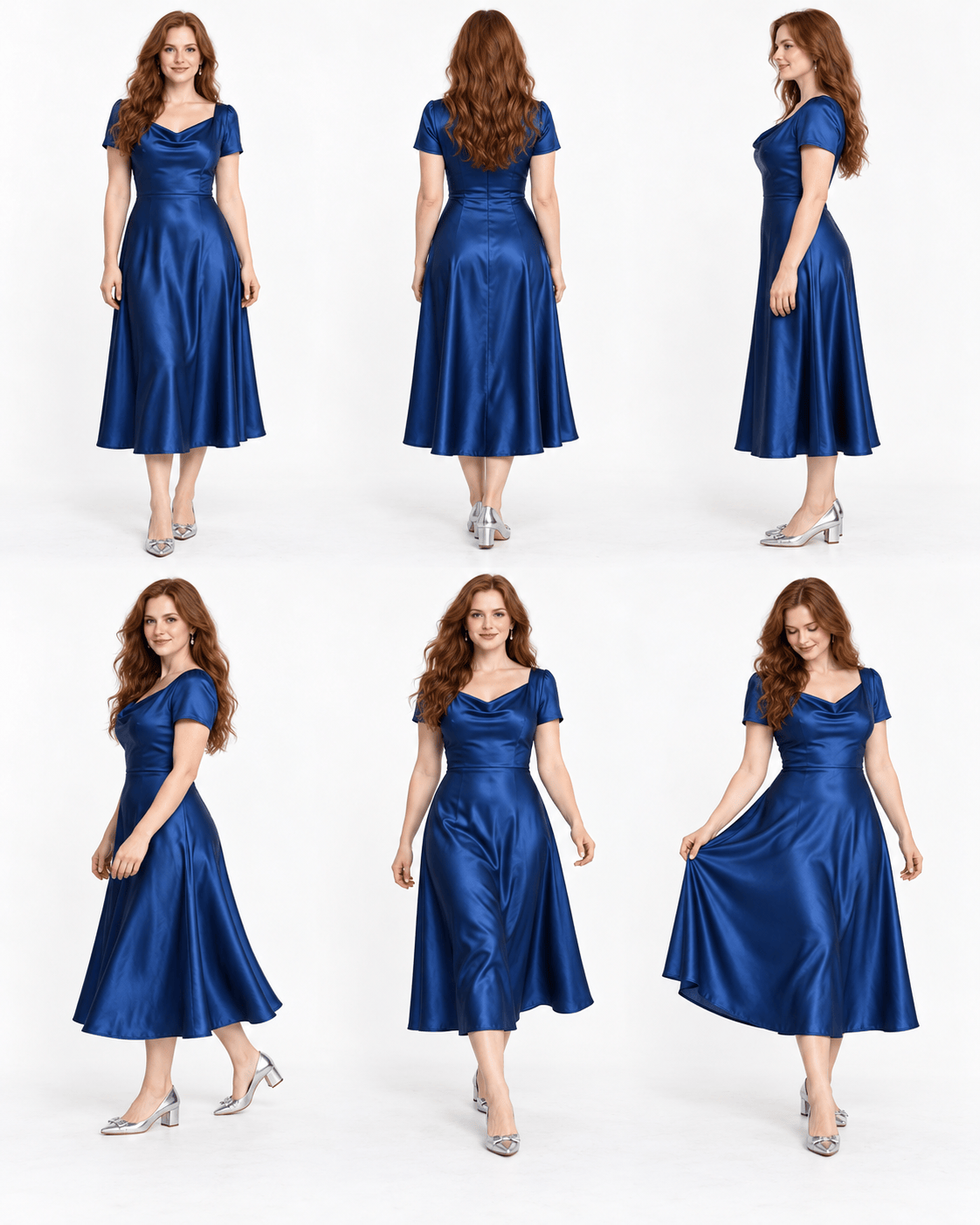
Create one photorealistic Instagram lookbook photo featuring six views of the same adult person. If I upload a reference photo, use it for facial identity, hairstyle, skin tone, age and natural body proportions. Otherwise use an adult woman with fair skin and long auburn waves. Outfit for this version: a sapphire satin midi dress with short sleeves and silver low heels. Keep this exact outfit, footwear and accessories consistent in every view. Arrange six views in 3 columns and 2 rows, on a white seamless studio background. Poses, in reading order: front standing; back view; left profile; small turning step; walking; holding skirt lightly. Control satin highlights; identical neckline and hem in every pose; no wind effects. Use soft editorial lighting, realistic contact shadows, natural skin and clear fabric detail. Keep every full-body figure visible from head to toe, with no collisions, extra limbs or duplicate poses. Output one 4:5 image, not separate files. No captions, text, logos or watermark.
Embroidered Lehenga Lookbook
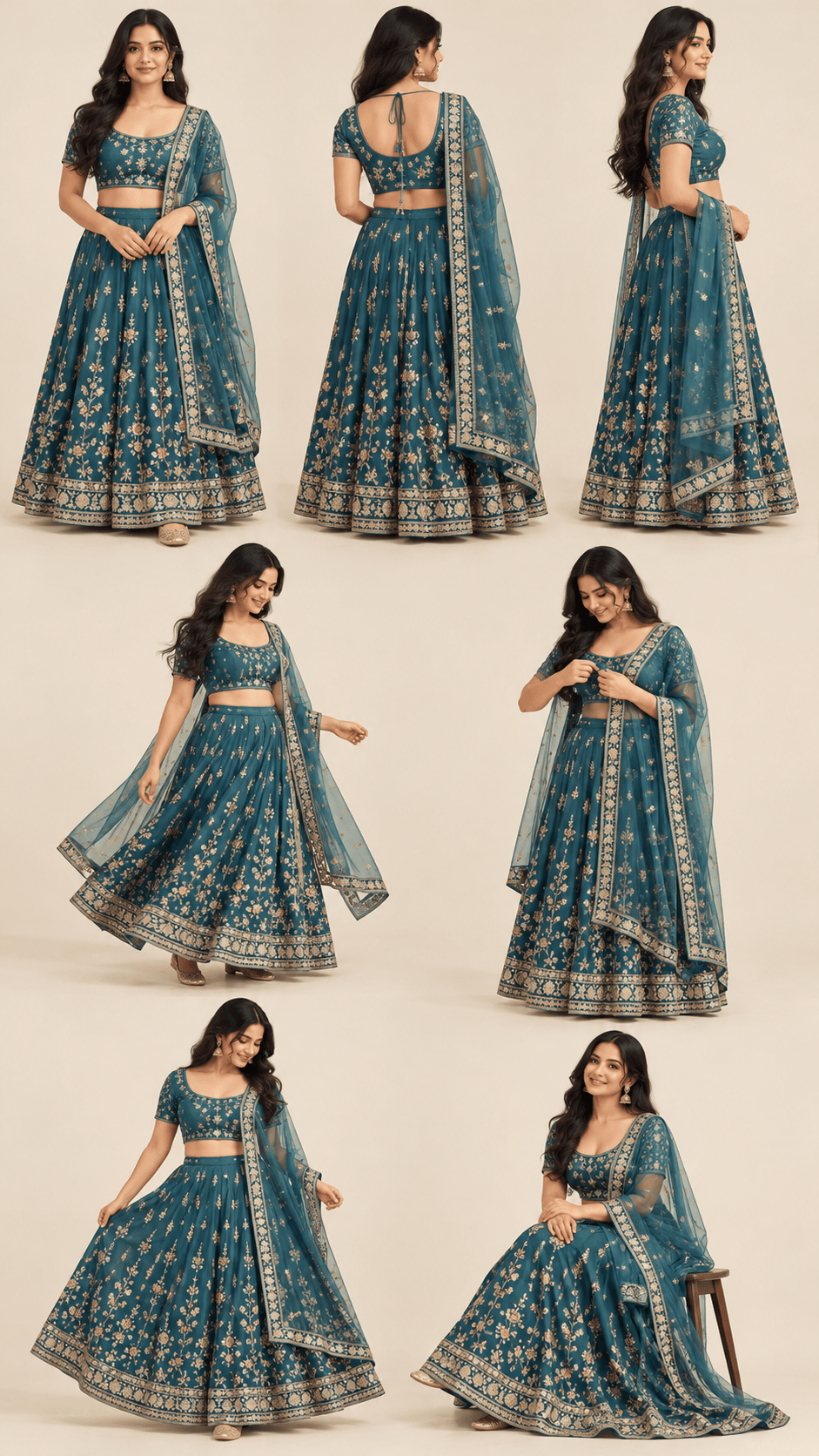
Create one photorealistic Instagram lookbook photo featuring seven views of the same adult person. If I upload a reference photo, use it for facial identity, hairstyle, skin tone, age and natural body proportions. Otherwise use an adult South Asian woman with long dark hair. Outfit for this version: a teal embroidered lehenga, matching modest blouse, light dupatta and gold flats. Keep this exact outfit, footwear and accessories consistent in every view. Arrange seven views in a borderless 3-2-2 arrangement, on a warm white studio background. Poses, in reading order: front standing; rear view; side profile; small walking step; arranging dupatta; holding skirt edge; seated gracefully on a stool. Keep the embroidery motifs, dupatta border and jewelry identical; preserve natural garment layers. Use soft editorial lighting, realistic contact shadows, natural skin and clear fabric detail. Keep every full-body figure visible from head to toe, with no collisions, extra limbs or duplicate poses. Output one 9:16 image, not separate files. No captions, text, logos or watermark.
Saree Draping Pose Collection
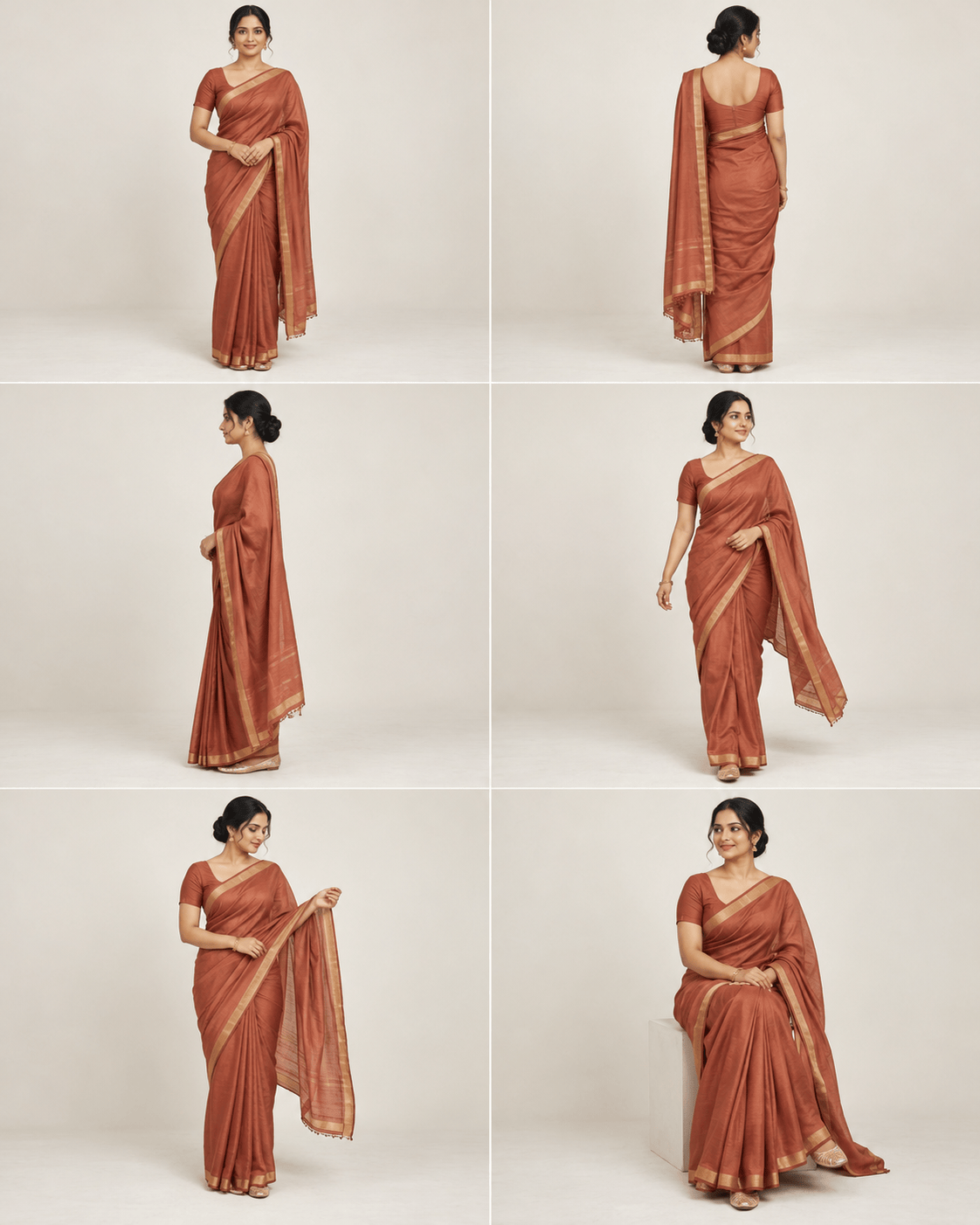
Create one photorealistic Instagram lookbook photo featuring six views of the same adult person. If I upload a reference photo, use it for facial identity, hairstyle, skin tone, age and natural body proportions. Otherwise use an adult South Asian woman with a low dark bun. Outfit for this version: a terracotta silk saree with a narrow gold border, matching short-sleeve blouse and gold flats. Keep this exact outfit, footwear and accessories consistent in every view. Arrange six views in 2 columns and 3 rows, on an ivory studio background. Poses, in reading order: front standing; rear view; side profile; walking; holding the pallu edge; seated upright. Maintain the same saree pleats, pallu shoulder and border width in each view. Use soft editorial lighting, realistic contact shadows, natural skin and clear fabric detail. Keep every full-body figure visible from head to toe, with no collisions, extra limbs or duplicate poses. Output one 4:5 image, not separate files. No captions, text, logos or watermark.
Kurta and Waistcoat Lookbook
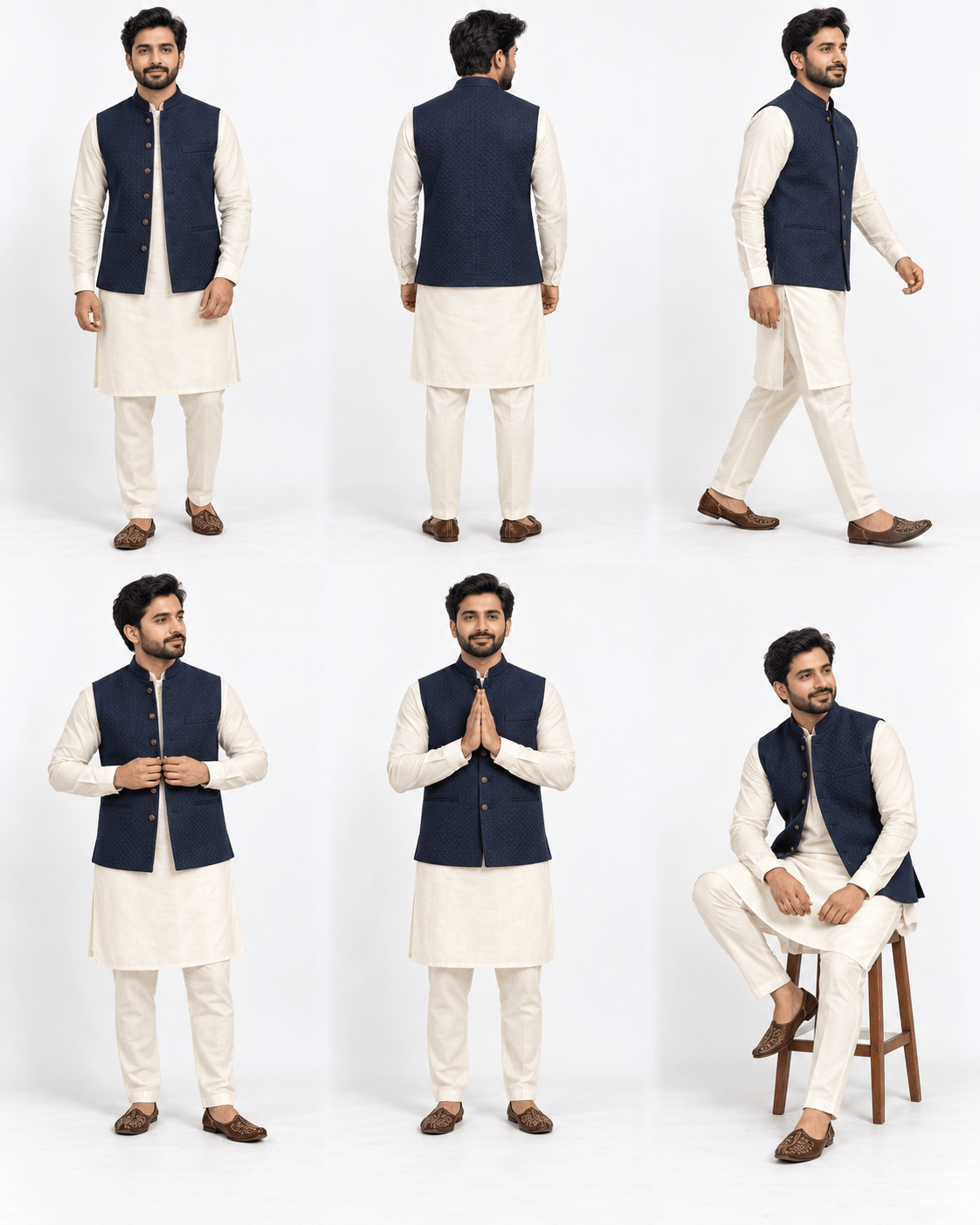
Create one photorealistic Instagram lookbook photo featuring six views of the same adult person. If I upload a reference photo, use it for facial identity, hairstyle, skin tone, age and natural body proportions. Otherwise use an adult South Asian man with short black hair and a trimmed beard. Outfit for this version: an ivory kurta pajama, navy textured waistcoat and brown jutti shoes. Keep this exact outfit, footwear and accessories consistent in every view. Arrange six views in 3 columns and 2 rows, on a white seamless studio background. Poses, in reading order: front view; back view; side walk; adjusting waistcoat; folded hands; seated on a stool. Keep waistcoat buttons, kurta length and shoe embroidery consistent. Use soft editorial lighting, realistic contact shadows, natural skin and clear fabric detail. Keep every full-body figure visible from head to toe, with no collisions, extra limbs or duplicate poses. Output one 4:5 image, not separate files. No captions, text, logos or watermark.
Modern Suit Event Poses
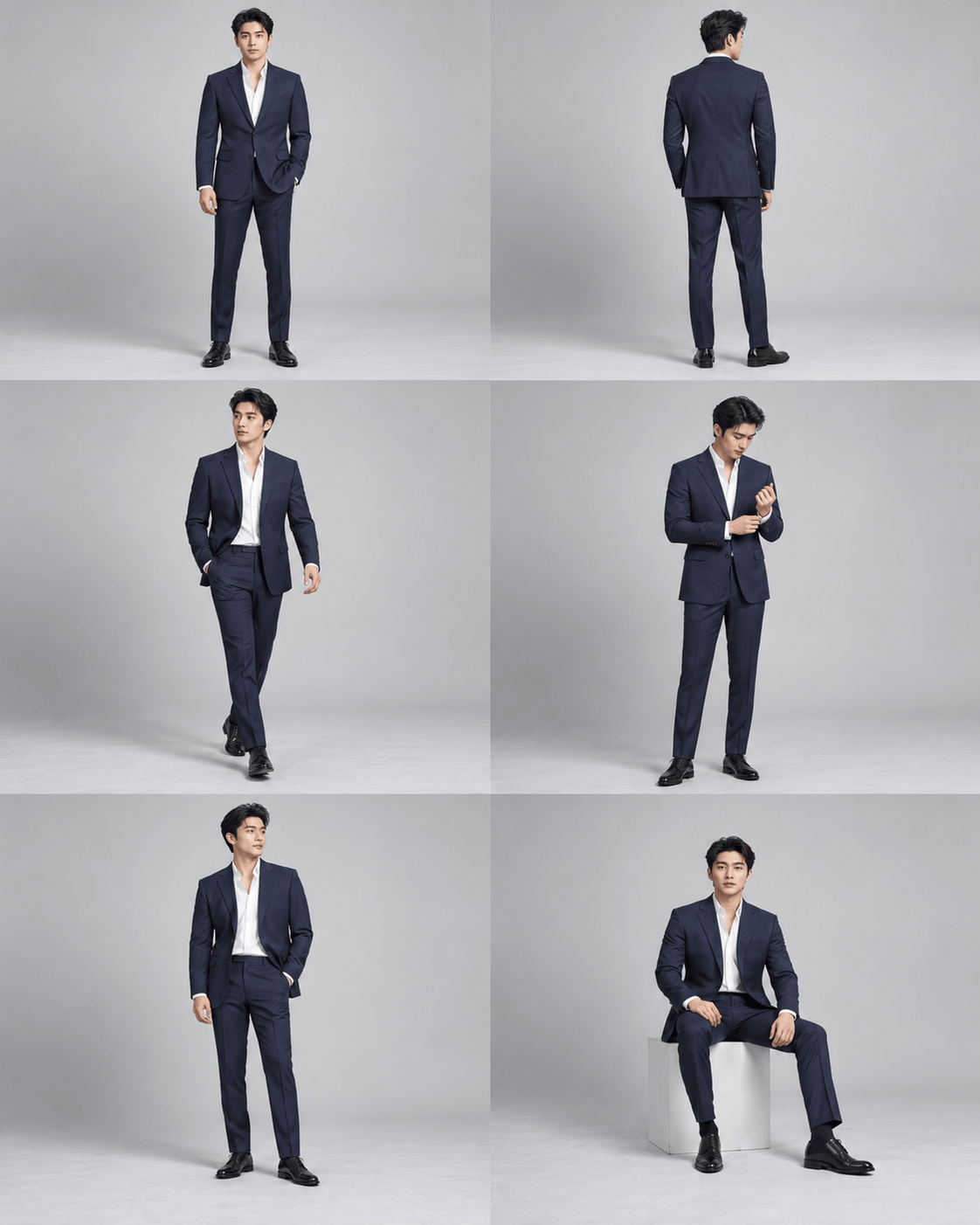
Create one photorealistic Instagram lookbook photo featuring six views of the same adult person. If I upload a reference photo, use it for facial identity, hairstyle, skin tone, age and natural body proportions. Otherwise use an adult East Asian man with swept-back dark hair. Outfit for this version: a navy two-piece suit, white open-collar shirt and black oxford shoes. Keep this exact outfit, footwear and accessories consistent in every view. Arrange six views in 2 columns and 3 rows, on a pale grey studio background. Poses, in reading order: front standing; rear view; walking; adjusting cuff; one hand in pocket; seated upright. Keep jacket fastening, trouser crease and shirt opening identical; realistic suit fit. Use soft editorial lighting, realistic contact shadows, natural skin and clear fabric detail. Keep every full-body figure visible from head to toe, with no collisions, extra limbs or duplicate poses. Output one 4:5 image, not separate files. No captions, text, logos or watermark.
Weekend Knit Dress Lookbook
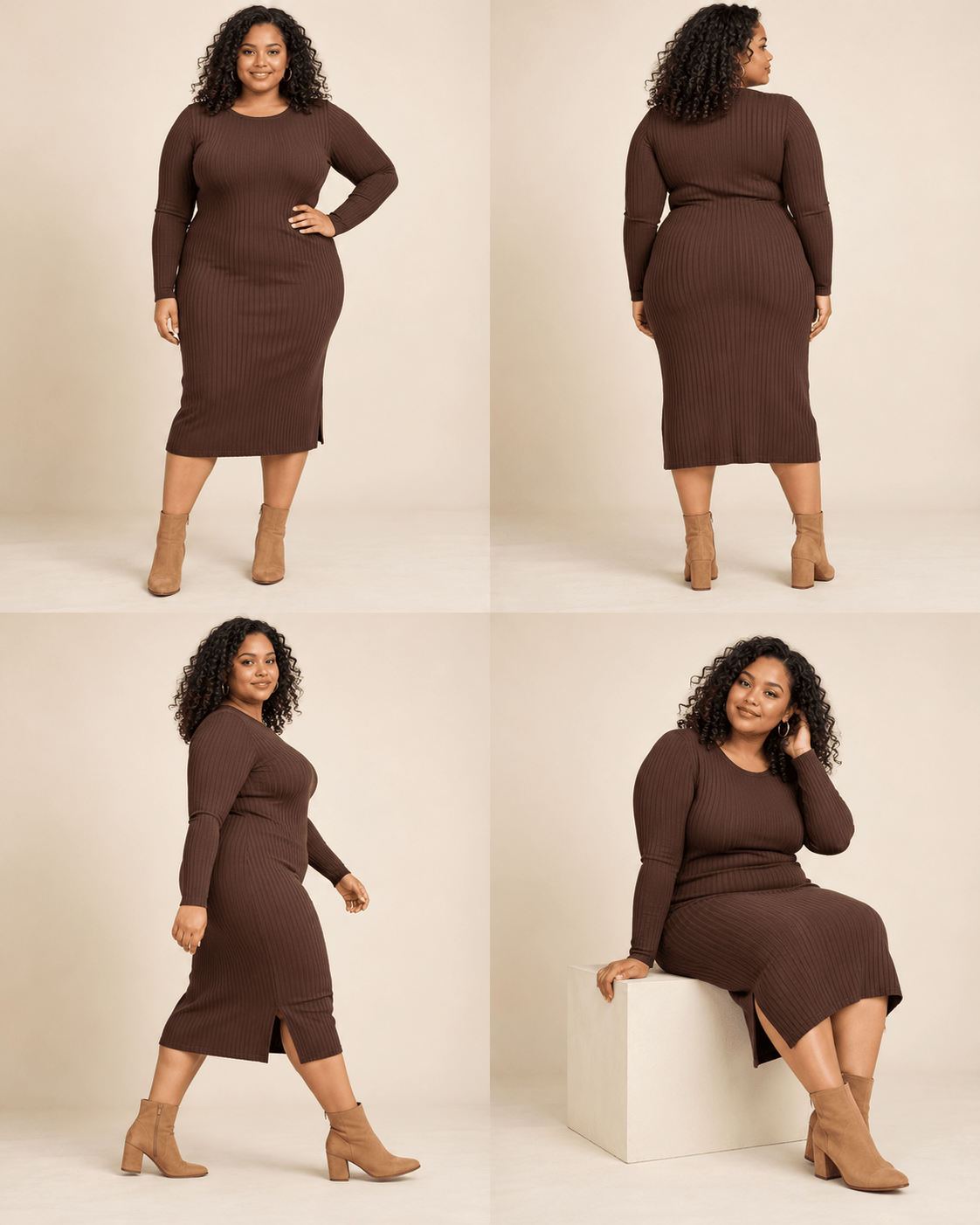
Create one photorealistic Instagram lookbook photo featuring four views of the same adult person. If I upload a reference photo, use it for facial identity, hairstyle, skin tone, age and natural body proportions. Otherwise use an adult plus-size woman with warm brown skin and shoulder-length curls. Outfit for this version: a chocolate ribbed long-sleeve midi dress and tan ankle boots. Keep this exact outfit, footwear and accessories consistent in every view. Arrange four views in 2 columns and 2 rows, on a warm cream studio background. Poses, in reading order: front standing; back view; profile walking; seated on a low block. Preserve natural body proportions without slimming; consistent ribbing and hem length. Use soft editorial lighting, realistic contact shadows, natural skin and clear fabric detail. Keep every full-body figure visible from head to toe, with no collisions, extra limbs or duplicate poses. Output one 4:5 image, not separate files. No captions, text, logos or watermark.
Winter Puffer Multi-Pose Edit
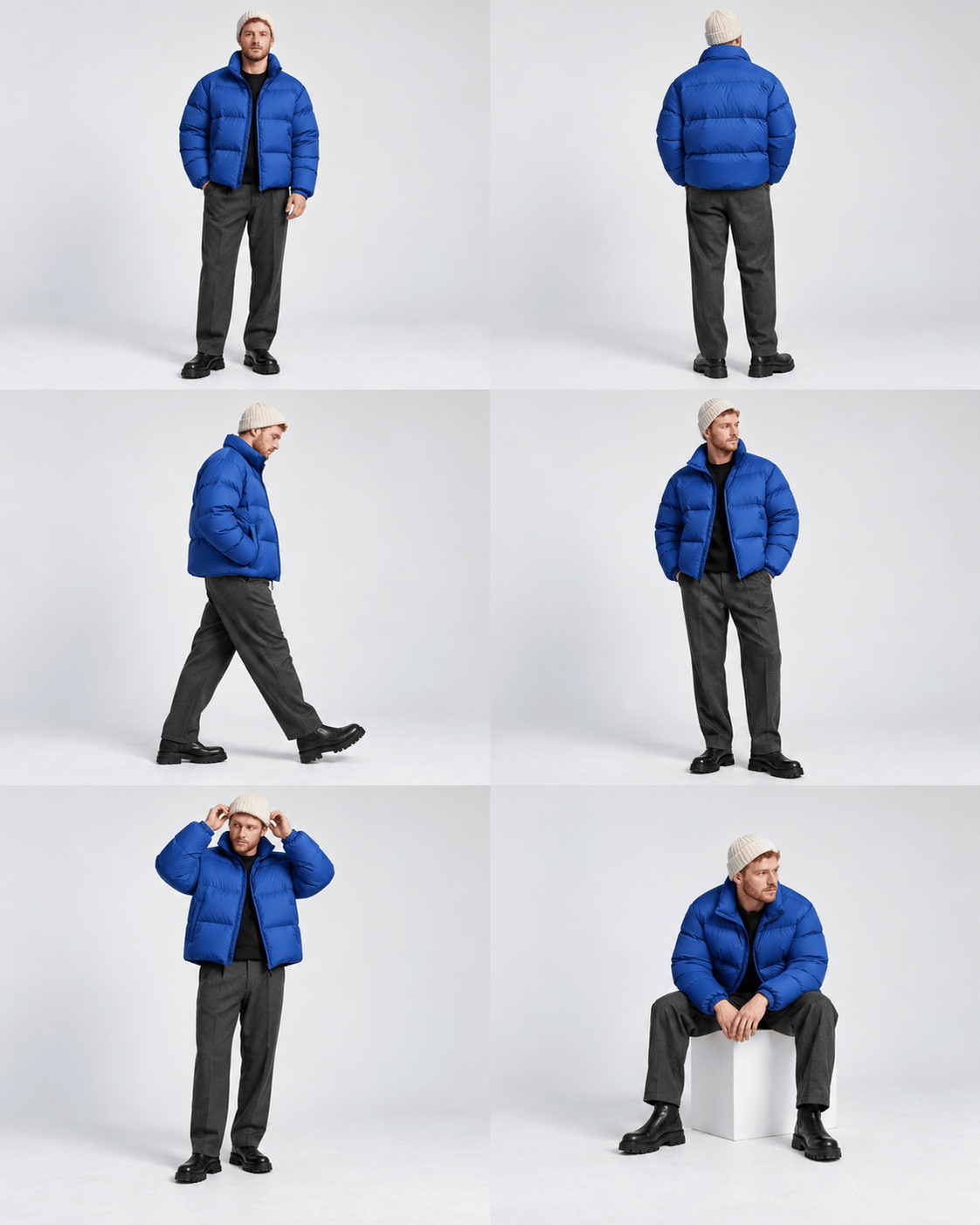
Create one photorealistic Instagram lookbook photo featuring six views of the same adult person. If I upload a reference photo, use it for facial identity, hairstyle, skin tone, age and natural body proportions. Otherwise use an adult man with fair skin and short red hair. Outfit for this version: a cobalt puffer jacket, cream knit beanie, charcoal trousers and black boots. Keep this exact outfit, footwear and accessories consistent in every view. Arrange six views in 2 columns and 3 rows, on a cool white studio background. Poses, in reading order: front standing; rear view; profile walking; hands in pockets; adjusting beanie; seated on a white cube. Repeat the same quilting pattern and jacket volume; hands and boot soles remain believable. Use soft editorial lighting, realistic contact shadows, natural skin and clear fabric detail. Keep every full-body figure visible from head to toe, with no collisions, extra limbs or duplicate poses. Output one 4:5 image, not separate files. No captions, text, logos or watermark.
How to Create Instagram Lookbook Photos With AI
A clear reference and an explicit pose list make the lookbook effect easier to control.
Choose Your Layout and Reference
Pick a four-, six-, seven- or eight-pose template. Upload a well-lit photo that clearly shows your face and full outfit; add a back view if rear garment details matter.
Paste and Personalize the Prompt
Choose whether to preserve your existing clothes or use the suggested outfit. Specify one consistent person, the exact pose count and either a grid or a seamless collage.
Generate and Check Every Pose
Compare faces, hairstyle, fingers, shoes and garment details. If one view drifts, ask to correct that view while keeping the approved layout and other poses unchanged. Try fewer poses if the faces are too small.
Export the Version That Fits Your Post
Use a 4:5 portrait composition for a feed-focused image or a 9:16 version for a Story layout. Leave space around heads and shoes, then check the crop in Instagram before sharing.
Build a Lookbook Around Your Own Outfit
Start With a Photo You Already Have
Use your portrait and outfit as visual references instead of describing every facial feature from scratch.
Choose the Layout Before Generating
Compare a simple four-pose layout with six-pose grids or denser seven- and eight-pose collages. Each prompt states how the figures should be arranged.
Keep Clothing Details in Focus
The templates name fabric, shoes and garment construction so you can check whether each pose still belongs to the same outfit.
Refine a Specific Problem in Chat
Ask to restore a missing shoe, correct one hand or match a jacket color. Describe what should change and what should stay the same.
Explore a Full Outfit Collection
For a seasonal collection or brand project, continue in the AI lookbook generator and build your brief around garment references, model direction and a consistent visual mood.
See the Idea Before Adapting It
Use the generated preview to judge spacing, pose variety and styling. Results vary, so inspect your personalized image before using it.


Instagram Lookbook Photo Prompt FAQs
It turns one person into several coordinated poses in one fashion-style image. The recognizable format uses the same face and outfit on a clean studio background, often arranged as six, seven or eight views. A grid uses regular rows; a seamless collage spreads the figures across one shared canvas.
Start with the Classic Six-Pose White Studio Grid for the familiar effect, or use the Four-Pose Beginner Lookbook when face detail matters more than pose count. The denser eight-pose layouts give more variety but leave less space for each face.
Upload a clear reference and explicitly ask to preserve facial features, hairstyle, skin tone, body proportions and the complete outfit. Use an additional garment view when possible. AI may still change details; inspect every face, sleeve, pocket and shoe, and request focused corrections.
Yes. Replace the suggested outfit sentence with: “Keep the complete outfit from my reference photo unchanged, including colors, fit, patterns, shoes and accessories, across every pose.” Avoid leaving a conflicting outfit description elsewhere in the prompt.
These prompts recreate the multi-pose lookbook aesthetic in an AI image tool. They do not require an Instagram preset. If a Restyle or Lookbook option is available in your Instagram editor, its interface and availability may differ by account and region.
The descriptive prompts can be adapted to image tools that accept text and reference photos. Upload the reference in the same task and keep the identity, outfit and pose instructions together. Controls, availability and results differ between tools; the sample images here do not establish equivalent results in every tool.
The prompts use 4:5 for most portrait compositions and 9:16 for taller collages. The three-view outfit study uses 3:2. Choose the format for your intended post, keep heads and shoes away from the edges, and inspect the final crop in the app.
Dense collages ask the model to solve many body positions at once. Reduce the count, use simple non-overlapping poses and list them in reading order. Ask to fix the named pose while preserving the rest, then compare the revised image again.
No. The collection combines the core multi-pose lookbook formats found in recent tutorials with original outfit and layout variations. Style remixes help you personalize the effect; they are not claims about separate viral trends or guaranteed engagement.
No. The examples were generated with original adult models to illustrate each prompt. Upload a photo you have permission to use for a personalized version. A back view generated from a front-only reference is an interpretation, so provide more references when accurate garment construction matters.
A personal lookbook usually repeats one outfit in several poses. A brand lookbook may present many products, looks and settings. Use the AI lookbook generator when you need to develop a collection, and check generated clothing against the original garments before using images as product representations.

