Free OnlineAI Sustainable Fashion Design
How to Create Sustainable Fashion Designs with AI
Frame the Sustainability Brief
Inventory Materials and Constraints
Generate a Circular Concept
Refine, Verify, and Export
Material-First Fashion Concepts for a Circular Brief
Start with What Already Exists
Describe a thrifted shirt, deadstock roll, damaged knit, or leftover trim in natural language. This free AI sustainable fashion design generator helps turn an inventory constraint into a visible design direction before sampling.
Keep the Material Story Visible
Upload photos, swatches, sketches, or reference images and ask Mew Design to preserve weave, fading, patch marks, selvedges, or distinctive color. Reinterpret the reference without copying a protected print or logo.
Explore Upcycling and Reconfiguration
Test detachable panels, reversible sides, repair patches, modular closures, adjustable hems, and multi-use silhouettes. The AI upcycling design generator can show how one starting garment might become a new product family.
Compare Circular Capsule Directions
Create coordinated looks that share fabric, trims, hardware, and construction logic. Compare a recycled-knit travel capsule, a zero-waste separates range, or an old-clothes redesign without rebuilding the whole concept from scratch.
Edit the Concept Through Conversation
Use Chat Edit to simplify a panel, change a closure, preserve a repair, alter the proportion, or request a quieter colorway. Keep the strongest material cues while exploring multiple AI-generated sustainable fashion directions.
Separate Inspiration from Proof
Mew Design creates visual concepts, not lifecycle assessments or certifications. Use the images to align a team, then verify fiber composition, supplier evidence, care, durability, labor claims, and any zero-waste or recycled-content statement before publishing.
How to Prompt AI for Sustainable Fashion Design
- Name the Starting Material: State whether you are using deadstock denim, thrifted cotton, recycled knit, plant-based leather, textile scraps, or a garment photo. Add weight, stretch, color, condition, quantity, and what must remain visible.
- Define the Circular Strategy: Ask for upcycling, repair, modular reconfiguration, reversible wear, mono-material thinking, zero-waste panels, or a longer-life capsule. Treat these as design goals, not proof of impact.
- Describe Construction and Use: Include silhouette, wearer, closures, seam placement, patchwork, pockets, adjustability, durability cues, care needs, and whether the result is for a moodboard, lookbook, pitch, or ecommerce concept.
- Request a Clear Product View: Choose a front-and-back studio view, flat lay, dress form, before-and-after redesign, material detail, or coordinated capsule lineup. Ask for realistic fabric behavior and avoid claims the image cannot verify.
AI Sustainable Fashion Design Prompts for Six Circular Directions
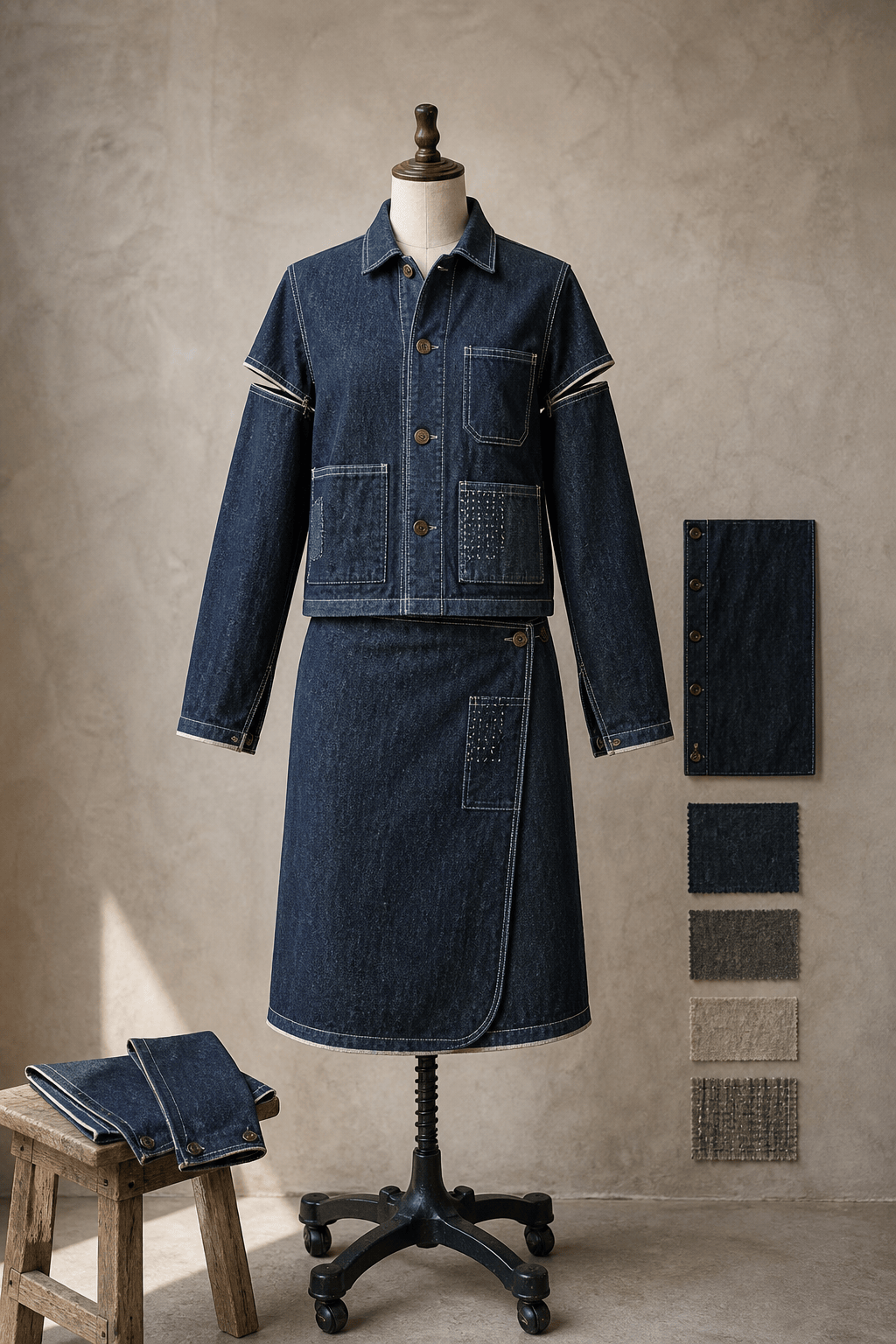
Deadstock denim upcycling: Turn a small inventory of deadstock indigo denim into a modular chore jacket and wrap skirt. Preserve selvedge edges, use contrast repair stitching, detachable sleeves, corozo buttons, and patch pockets. Show front and back product views on a dress form, realistic denim weight, no logo or text.
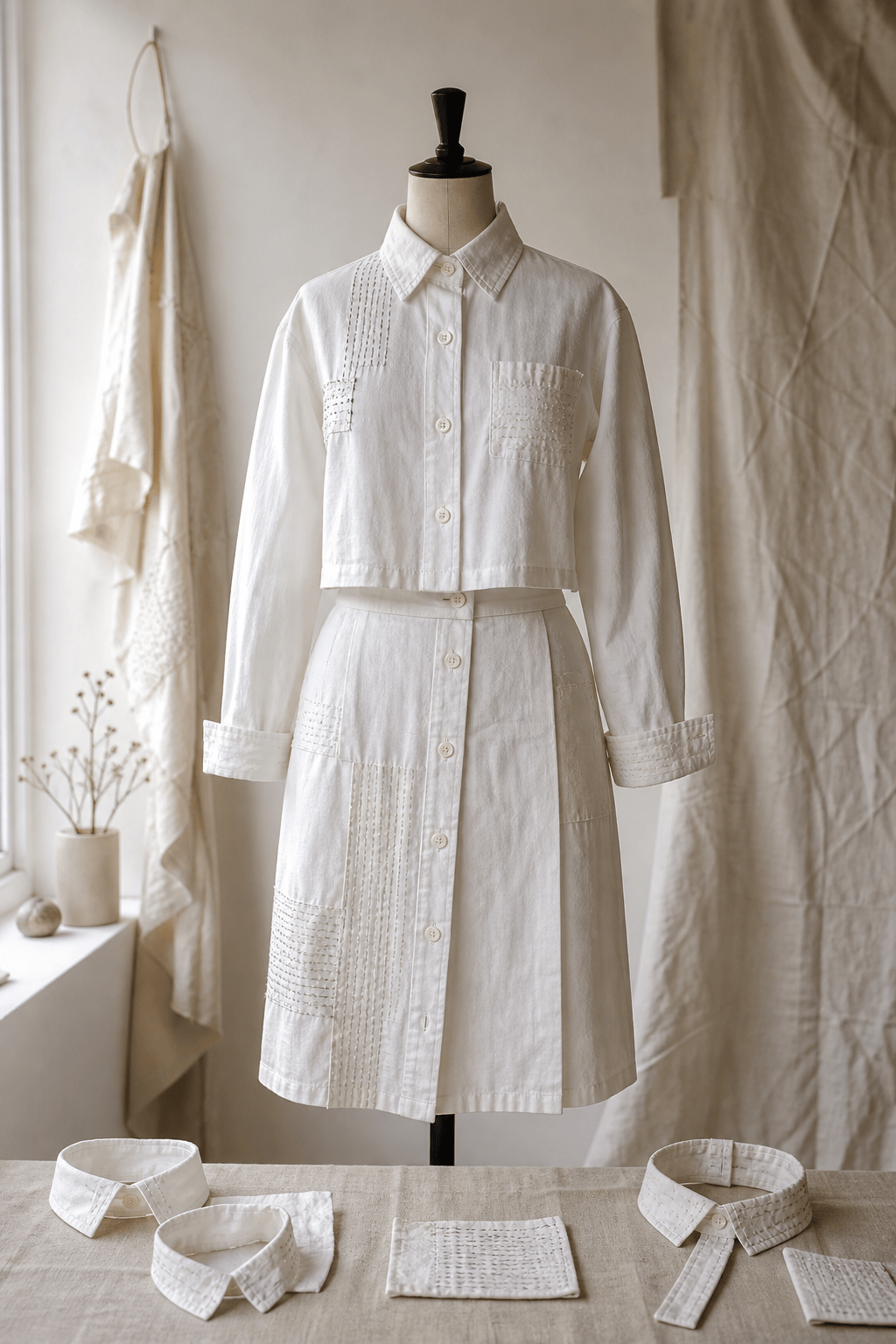
Old-clothes redesign: Rework two thrifted white cotton shirts into a cropped overshirt and matching panel skirt. Keep the original button plackets and cuffs, join panels with visible sashiko-inspired repairs, and use the leftover collars as detachable accessories. Clean editorial flat lay, concept visualization only.
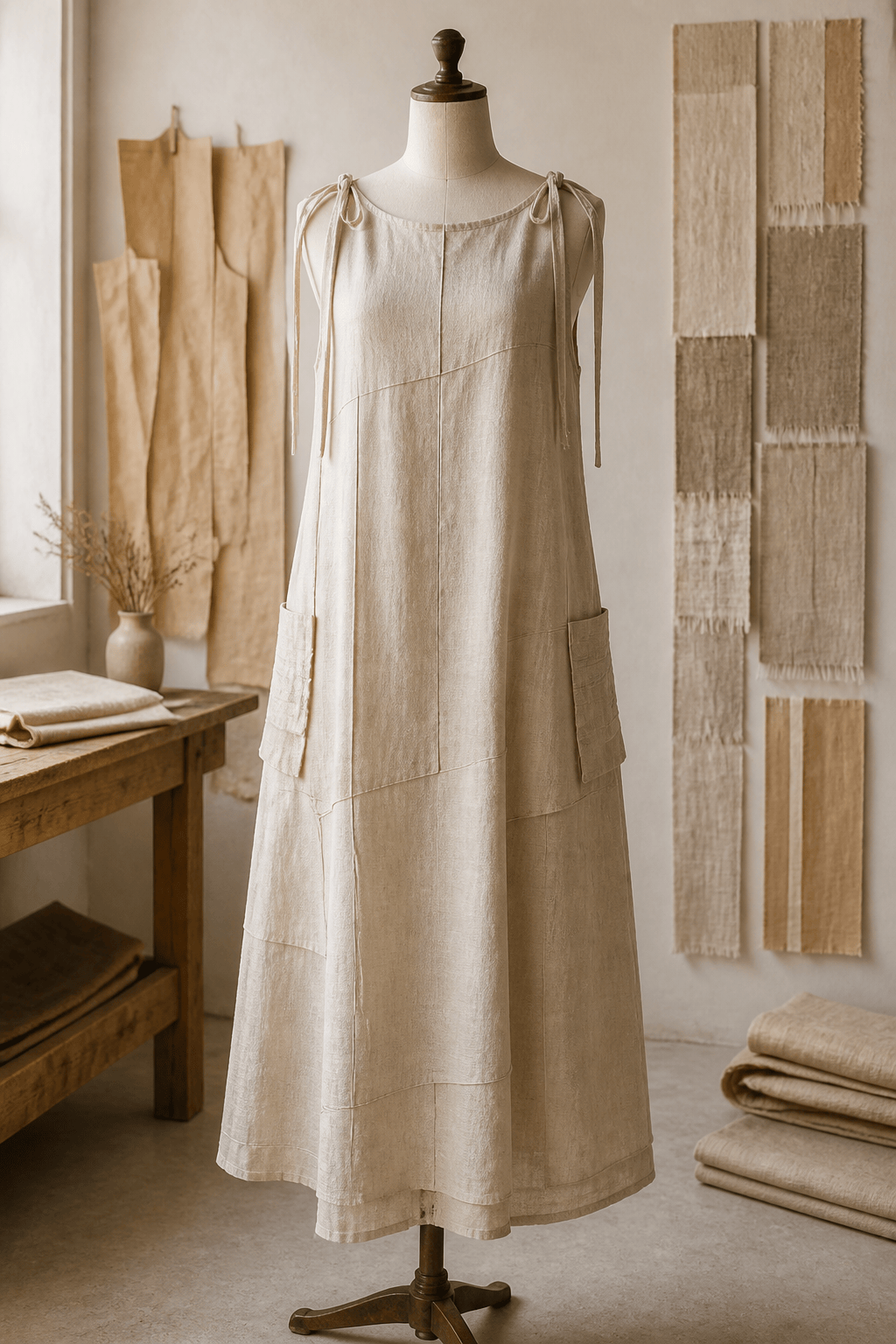
Zero-waste fashion design ideas: Create a relaxed day dress from interlocking rectangles that use the full width of a linen roll. Include adjustable ties, minimal curved seams, a repairable hem, and pockets cut from narrow offcuts. Neutral dress form, diagram-like front and back views, no claim of verified zero waste.
Recycled clothing design generator: Design a performance vest and short from recycled polyester knit and recovered mesh. Use mapped ventilation zones, replaceable zip pulls, flat seams, and a mono-material direction where practical. Slate, moss, and clay colorway; studio product view, technical but not factory-ready.
Plant-based material concept: Create a refined everyday tote, overshirt, and trouser capsule using a plant-based coated textile, organic cotton jersey, and recycled metal hardware. Show tactile material close-ups, restrained earth tones, repair-friendly construction, and a consistent lookbook lineup. Do not invent certifications or environmental metrics.
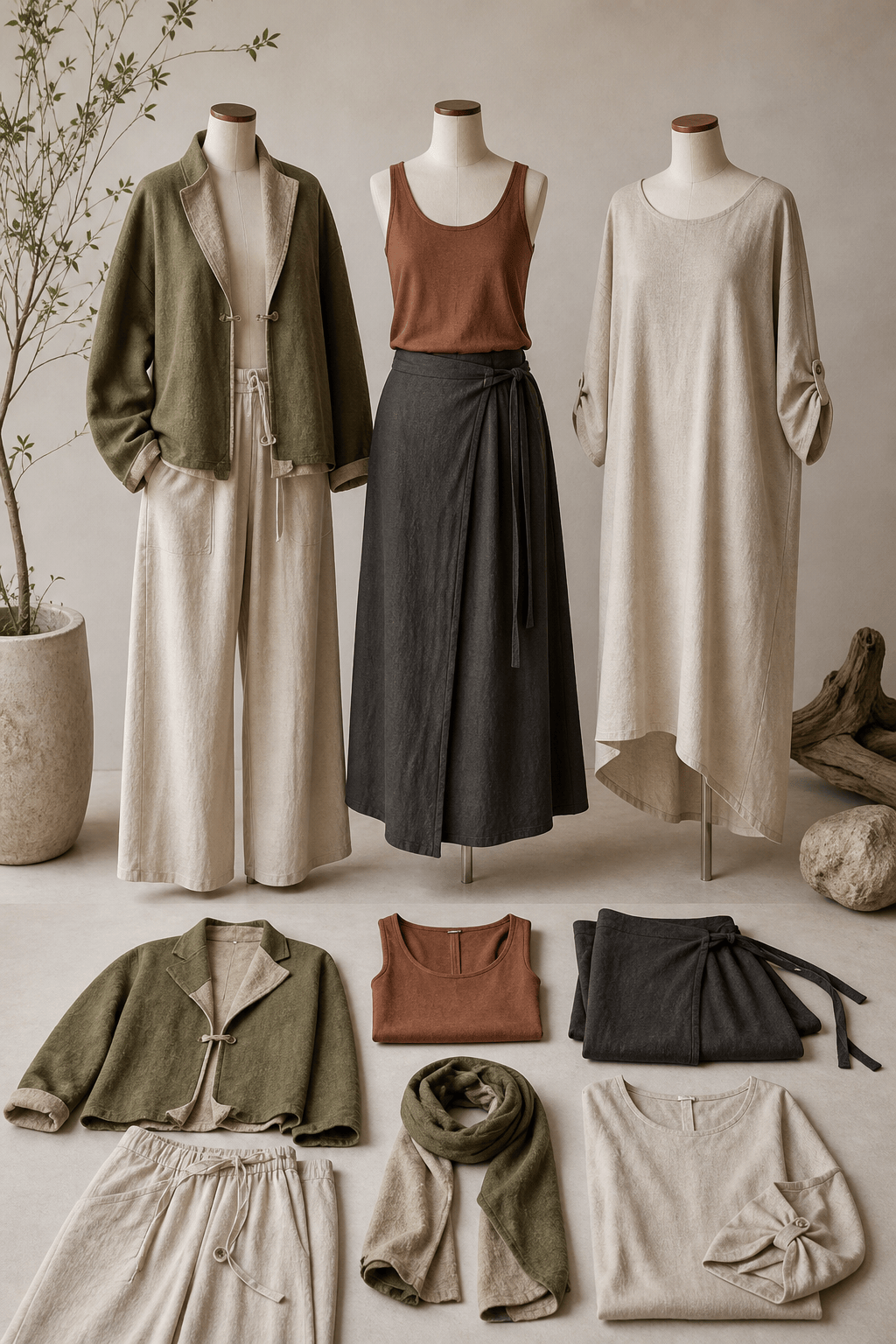
AI capsule wardrobe design: Build a six-piece circular travel wardrobe from one recycled knit story: reversible jacket, tank, wide-leg trouser, skirt, scarf, and relaxed dress. Make every piece coordinate, include adjustable or multi-use details, and show three outfit combinations in a clean editorial lineup with no person, logo, or text.