Free OnlineAI Furniture Design Generator
How to Design Furniture with AI
Define the User and Function
Set Form, Materials, and References
Generate a Product Concept
Stress-Test the Design Visually
Why Designers Trust Mew Design for AI Furniture Design
Start from Words or a Hand Sketch
Describe an idea in plain language or upload a drawing. Mew Design can turn loose intent into a more legible visual proposal without requiring a polished 3D model.
Keep the Product as the Hero
Generate clean studio-style views that make silhouette, proportions, materials, edges, seams, handles, and base details easier to judge.
Explore Material Families Quickly
Compare oak and walnut, leather and bouclé, powder-coated steel and recycled plastic, or matte and gloss finishes before narrowing a direction.
Use References Without Copying the Room
Upload a material, construction detail, or visual mood and explain what it should guide. The AI furniture designer can apply that direction to a new piece.
Revise the Same Design in Conversation
Chat Edit supports focused changes such as wider arms, thinner shelves, softer corners, a lower profile, or a different base, making critique more actionable.
Build a Coherent Concept Set
Create coordinated versions for a furniture collection or show one piece across studio, detail, and interior views while keeping the design language consistent.
What Makes a Good AI Furniture Design Prompt
- Name the Job: State the user, posture, storage need, room type, and daily behavior the piece supports.
- Control Proportion: Add approximate height, width, depth, seat height, capacity, or nearby objects that establish scale.
- Specify Construction Cues: Mention frame, panels, joints, legs, hardware, seams, edge profiles, and where materials meet.
- Choose the Review View: Request an isolated three-quarter render for product critique, a detail view for joinery, or an interior scene for context.
Customizable AI Furniture Design Prompt Examples
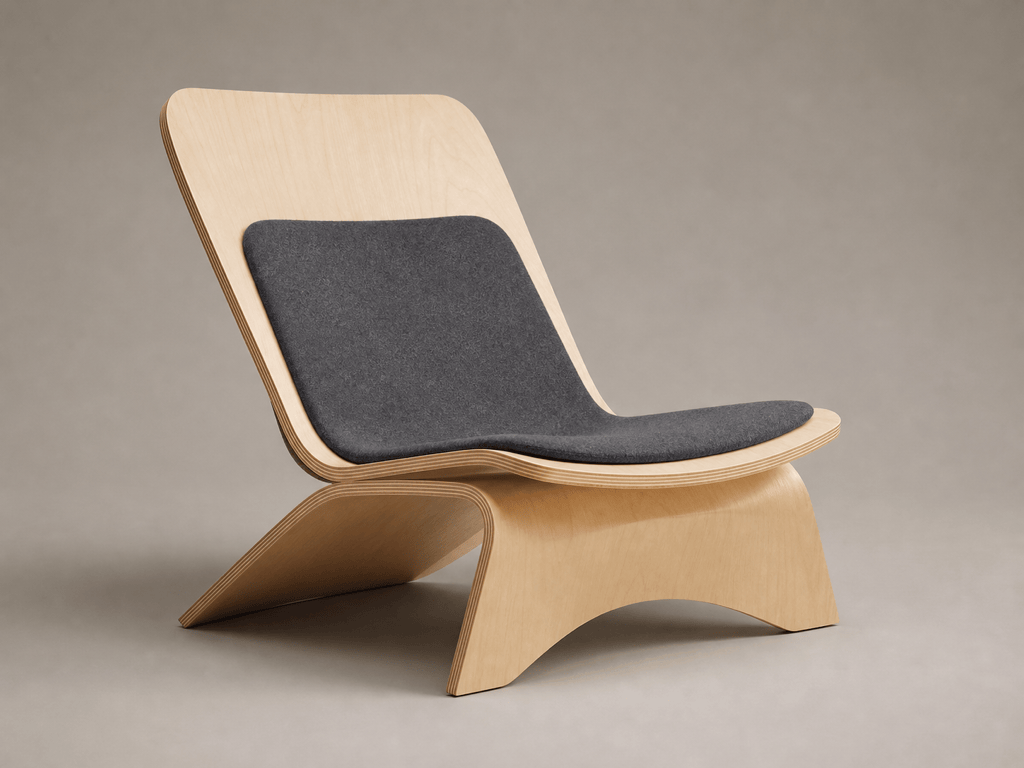
Chair Study: Create a sculptural lounge chair inspired by folded paper, made from molded birch plywood with a thin wool seat pad. The shell must appear continuous and structurally plausible, with comfortable seat and back angles. Three-quarter studio render, soft shadows, neutral background.
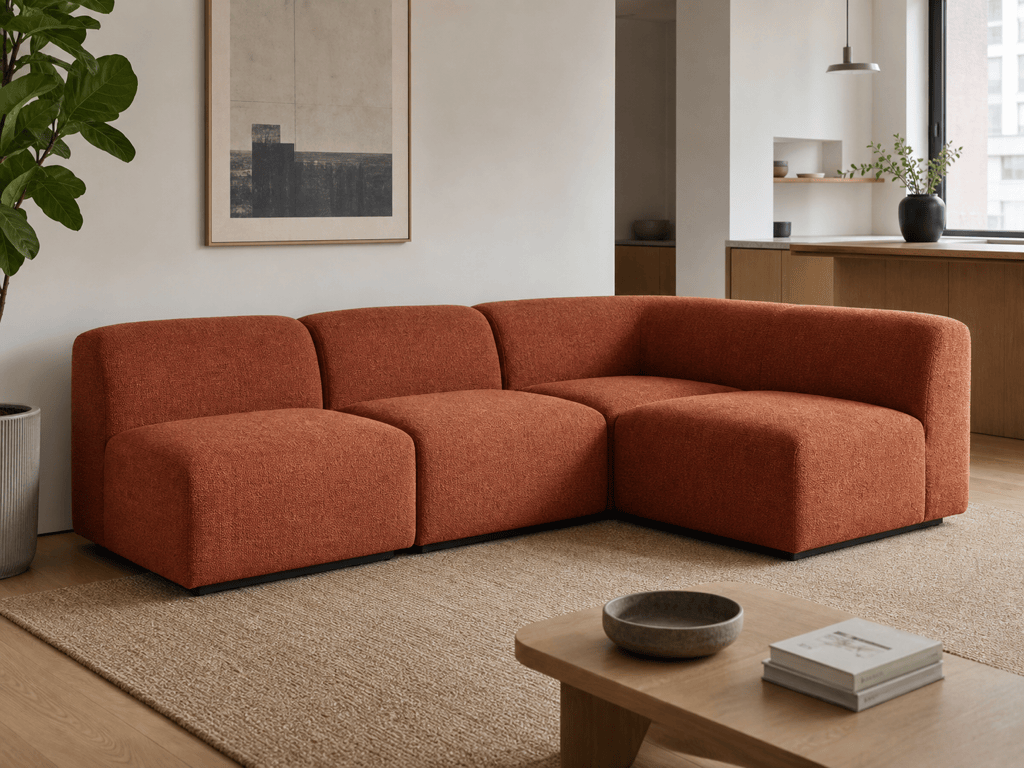
Modular Sofa: Design a low modular sofa for a family apartment. Three reconfigurable seats, one corner unit, rounded backs, washable rust-colored fabric, hidden connectors, firm deep cushions, and black recessed feet. Show one L-shaped arrangement in a bright living room at realistic scale.
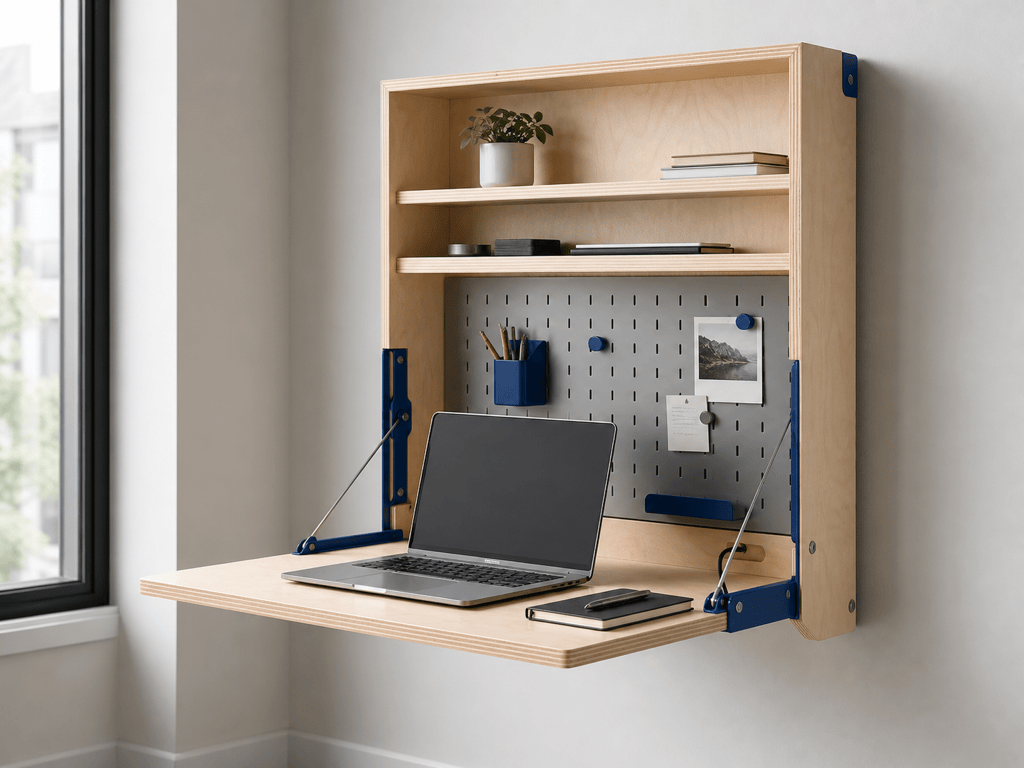
Small-Space Desk: Turn my uploaded sketch into a wall-mounted desk that folds closed to 18 centimeters deep. Include laptop space, cable routing, two shallow shelves, a magnetic task board, and birch plywood with cobalt-blue hardware. Preserve the sketch proportions and show open and closed concept views.
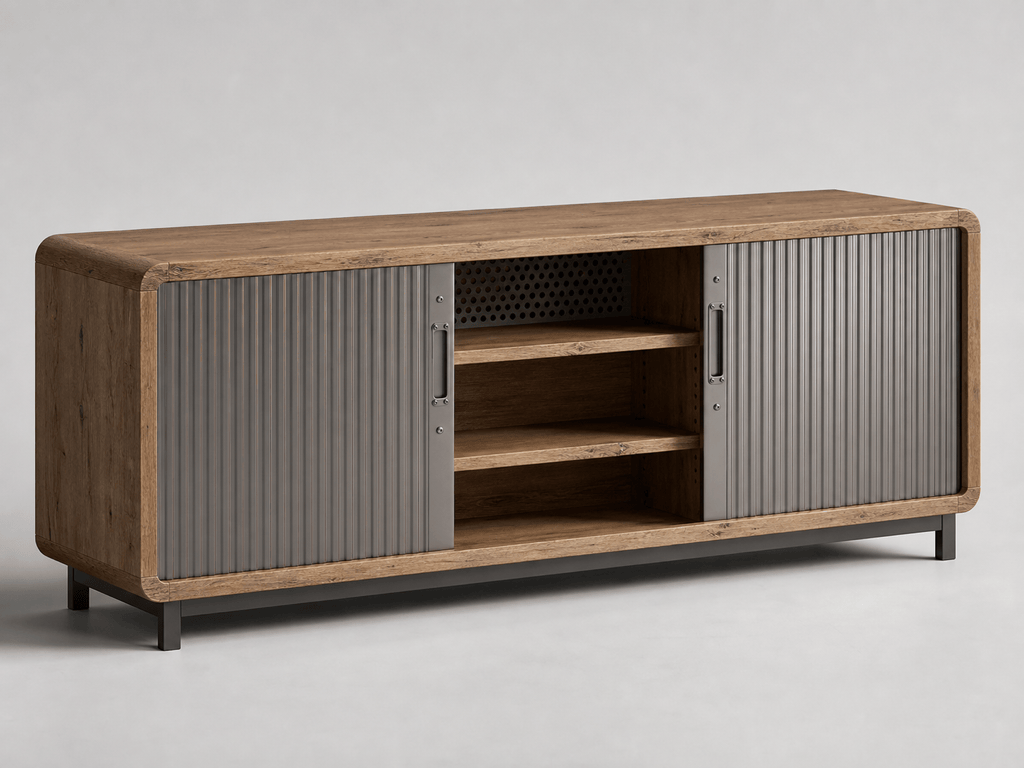
Sustainable Sideboard: Create a 160-centimeter sideboard from reclaimed oak and recycled aluminum. Sliding tambour doors, adjustable shelves, replaceable hardware, ventilated media compartment, and rounded corners. Honest material textures, front three-quarter product render, no decorative objects.
Cafe Table Collection: Develop a coordinated cafe set with a compact round pedestal table and stackable chair. Powder-coated dark green steel, replaceable cork seats, durable outdoor finish, simple manufacture, and a friendly contemporary character. Show four chairs around one table on a plain terrace.
Bedside Cabinet: Design a narrow bedside cabinet for a small bedroom: 32 centimeters wide, one soft-close drawer, an open book shelf, integrated wireless-charging surface, rear cable slot, warm walnut veneer, and a slim brushed-steel base. Photorealistic isolated product image.