Free OnlineAI Futuristic City Generator
How to Generate a Futuristic City with AI
Choose the Future and Its Tension
Invent a Coherent City Language
Direct the Establishing Shot
Refine the World Through Conversation
Why Choose Mew Design as Your AI Futuristic City Generator
Start from a Story Premise
Ground the image in a social or environmental idea—abundant clean energy, corporate control, rising seas, lunar settlement, automated logistics, or a post-carbon culture.
Control the Architectural DNA
Define silhouettes, structural logic, facade rhythm, materials, color, age, density, and regional influences to avoid an anonymous collection of sci-fi towers.
Show How the City Works
Add transit layers, energy systems, markets, parks, maintenance, waste, water, food production, and everyday movement as visual worldbuilding details rather than labels.
Create Convincing Scale and Life
Use people, vehicles, trees, bridges, windows, haze, foreground objects, and a clear focal landmark to make monumental environments readable and inhabited.
Use References Without Losing the Idea
Upload a sketch, palette, material study, skyline silhouette, or prior city image and explain which composition or design cues should guide the next result.
Develop Multiple Views of One World
Move from a panoramic establishing shot to street level, transit hub, neighborhood, night version, or poster crop while repeating distinctive materials, landmarks, and atmosphere.
How to Write an Effective AI Futuristic City Prompt
- Name the Premise: Set era, location, climate, culture, economy, governing tension, and emotional tone before listing visual motifs.
- Build a Visual System: Coordinate architecture, materials, infrastructure, transport, landscape, fashion, lighting, and signs around one clear design logic.
- Give the Camera a Job: Choose viewpoint, lens feel, depth, focal landmark, foreground action, time, weather, palette, art medium, and aspect ratio.
- Remove the Future Clichés: State what to avoid—random flying cars, unreadable holograms, empty plazas, excessive neon, impossible scale, or a mashup of unrelated styles.
AI Futuristic City Prompt Examples You Can Tweak
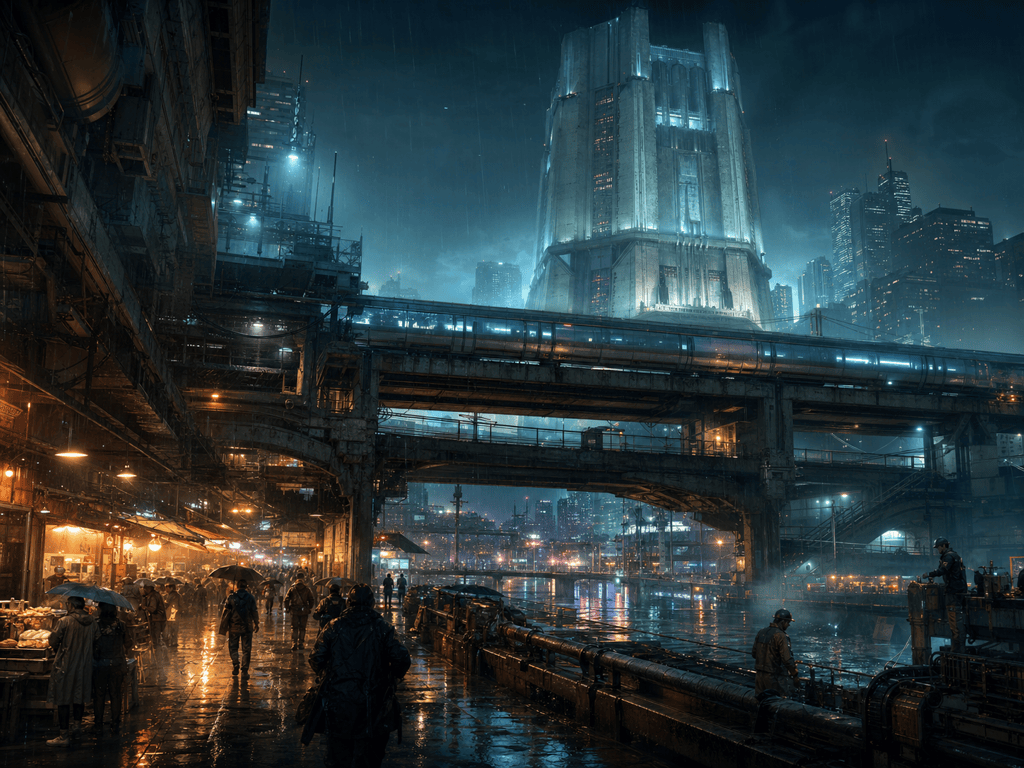
Rain-Layered Cyberpunk Megacity: Create a street-level view beneath a stacked transit interchange in a dense coastal megacity at midnight. Aging concrete megastructures support newer glass towers, elevated trains, delivery drones, crowded food stalls, repair shops, and rainwater channels. Cyan and amber light reflects on wet pavement; one enormous civic tower anchors the composition. Cinematic concept art, human scale, no readable brand names.
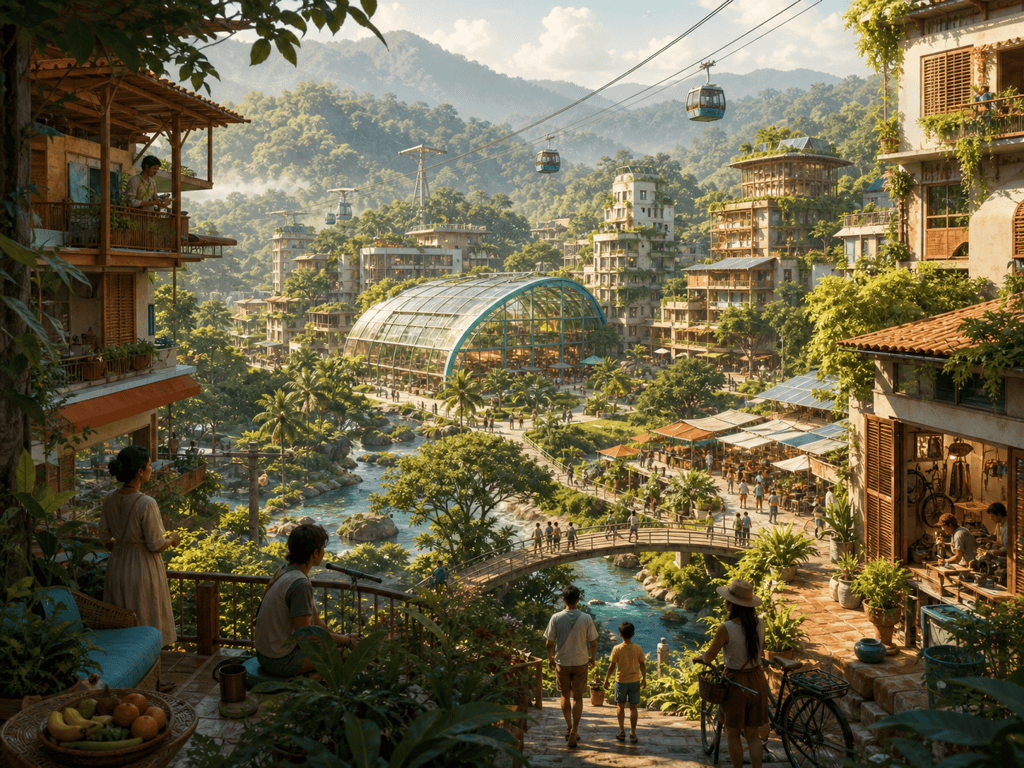
Tropical Solarpunk City: Visualize a car-light city woven through a restored rainforest valley. Use shaded timber towers, ceramic sun screens, rooftop farms, cable transit, clear streams, community courtyards, repair workshops, and lively markets. Show residents of different ages, warm morning light, breathable space, lush greens and earth tones, optimistic editorial illustration—not glossy techno-utopia.
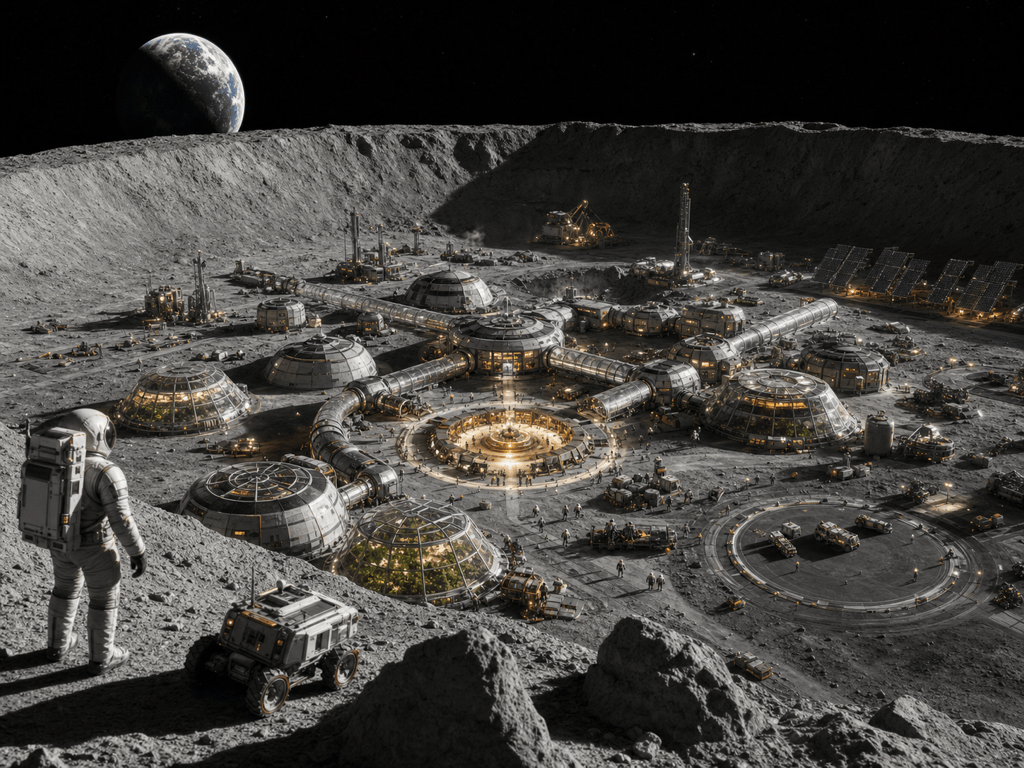
Lunar Crater Settlement: Design an inhabited city inside a moon crater in 2240. Connect pressurized regolith habitats with transparent transit tubes, radiation-shielded gardens, rover ports, solar fields, mining equipment, and an illuminated central commons. Earth hangs low above the rim. Wide cinematic view with restrained white, charcoal, and amber palette; scientifically inspired concept art, no fantasy atmosphere.
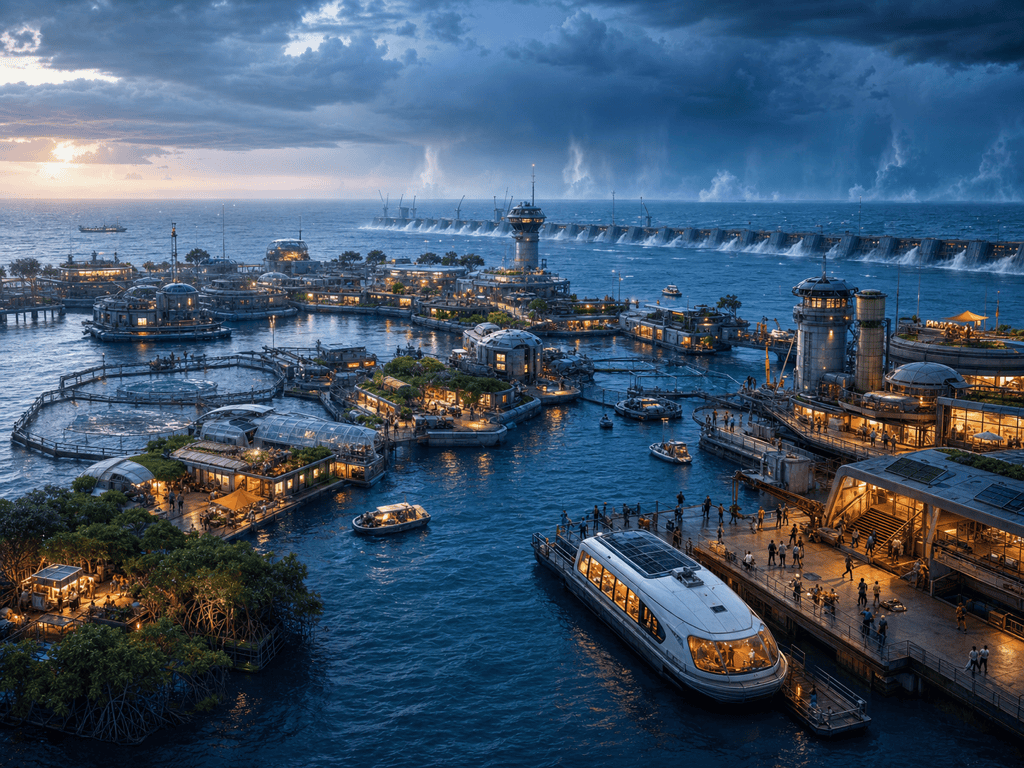
Floating Climate City: Create an ocean settlement built from modular neighborhoods around a storm-protected lagoon. Include wave-energy barriers, desalination towers, aquaculture, ferry docks, mangrove platforms, schools, clinics, markets, and repair yards. Show a storm wall on the horizon and daily life in the foreground. Hopeful climate-fiction concept art at blue hour, realistic water and weather.
Retrofuturist Desert Capital: Imagine a 1960s-inspired future city beside a desert rail junction. Monumental concrete shells, shaded arcades, solar chimneys, atomic-age transit pods, public fountains, patterned stone, and a low domed parliament surround a bustling central station. Dusty sunset, burnt orange and turquoise palette, vintage travel-poster composition with no text.
Arctic Post-Carbon Research City: Create an aurora-lit polar city organized around geothermal halls and a protected winter garden. Low insulated structures connect by covered walkways; autonomous cargo sleds serve laboratories, homes, workshops, and a small harbor. Show wind turbines, ice monitoring equipment, bundled residents, and one luminous greenhouse landmark. Quiet, credible science-fiction matte painting.