Curious How Your Photo Comes Across? Try anAI Beauty Test
How to Take an AI Beauty Test Without Turning It into a Verdict
Pick a Feedback Lens
Upload One Consenting Adult Portrait
Ask for a Balanced Portrait Profile
Improve the Image, Not the Person
Beauty Feedback Built Around the Photo, Not a Universal Ideal
Choose Your Own Aesthetic Lens
Ask for a warm, editorial, natural, bold, professional, or playful impression instead of pretending there is one global beauty standard. The AI beauty test can state the chosen lens before giving feedback.
Strengths Come Before the Score
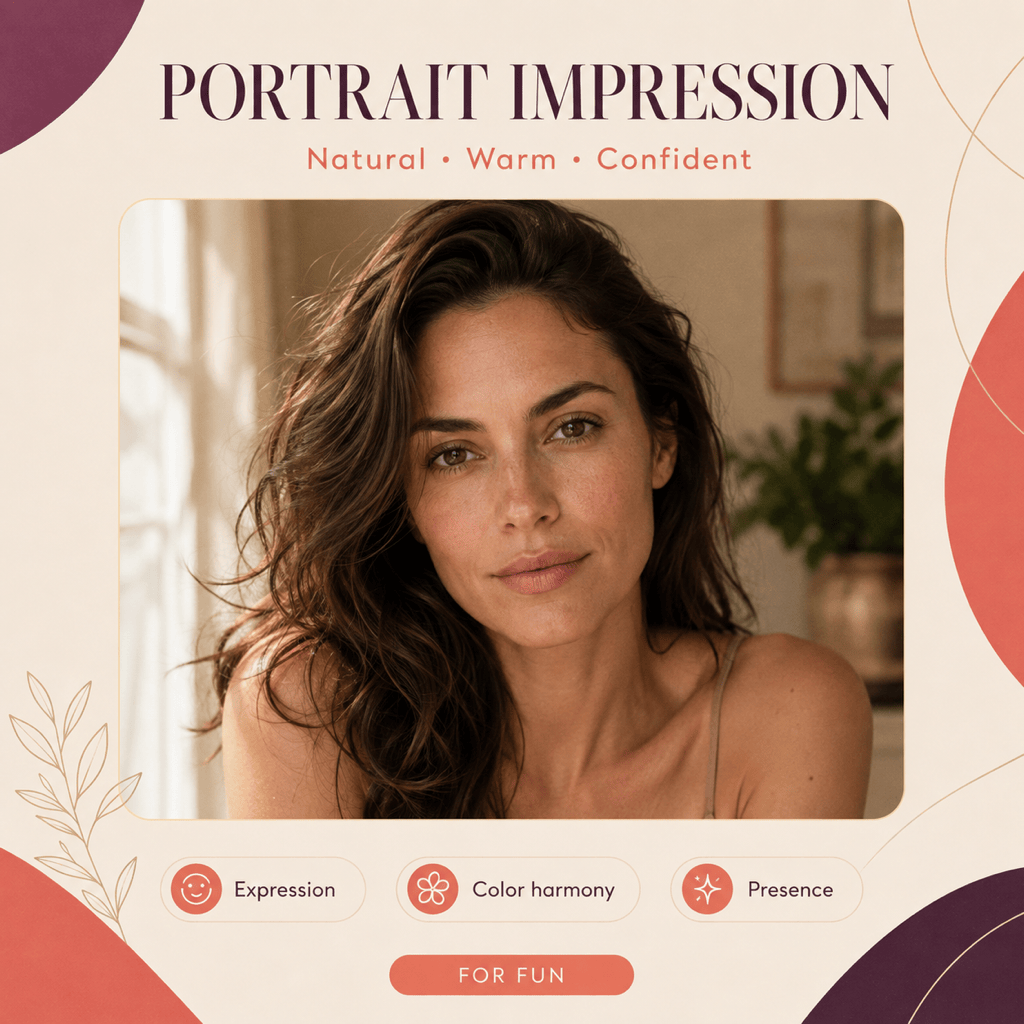
Prompt Mew Design to begin with what reads well in the portrait—expression, eye contact, color harmony, balance, or presence—then give a broad entertainment range rather than a harsh pass/fail label.
Photo Variables Stay Separate
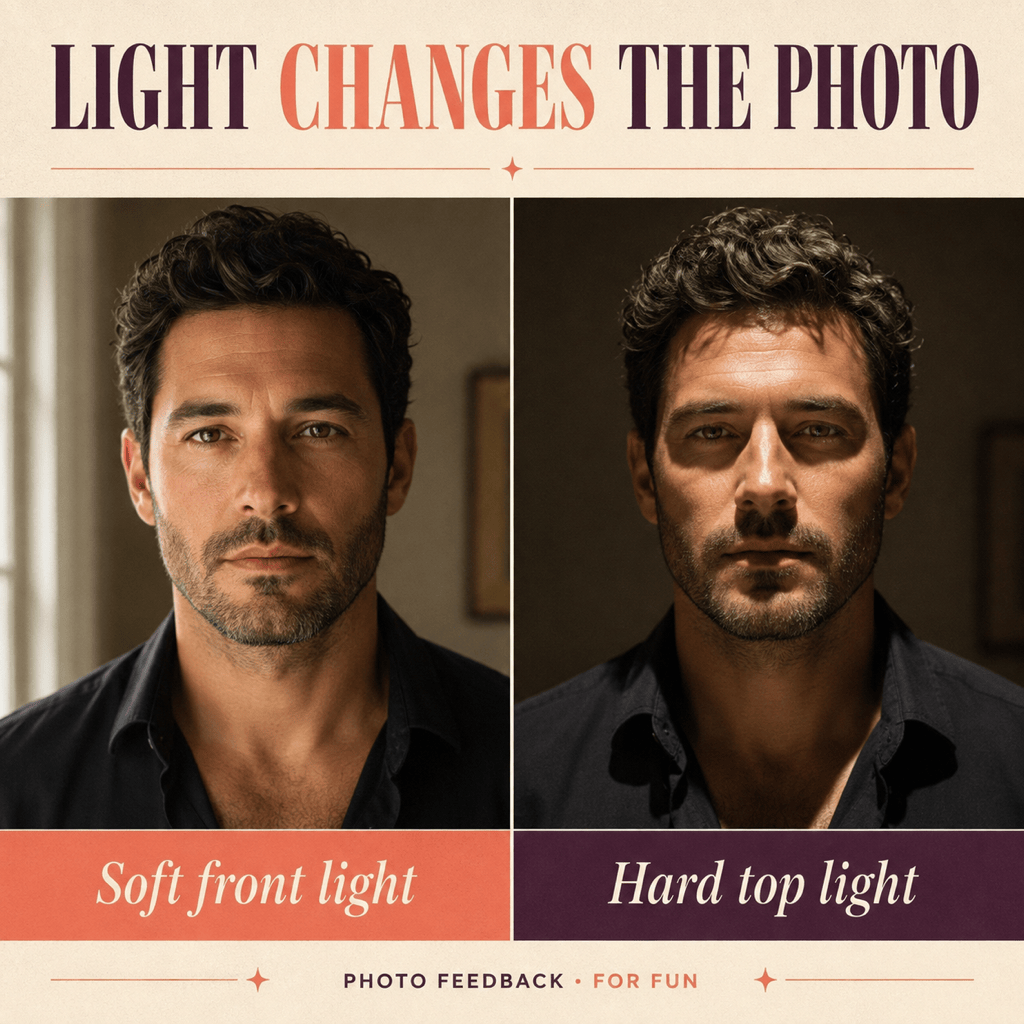
Lighting, lens distance, angle, expression, clarity, framing, and filters can change an AI beauty score. Separating those factors from facial features makes comparisons more honest and actionable.
Compare Profile Photos Side by Side
Use two authorized adult portraits and ask which one communicates your intended mood more clearly. Focus the comparison on portrait presentation instead of ranking two people or declaring one face better.
Turn Feedback into a Visual Story
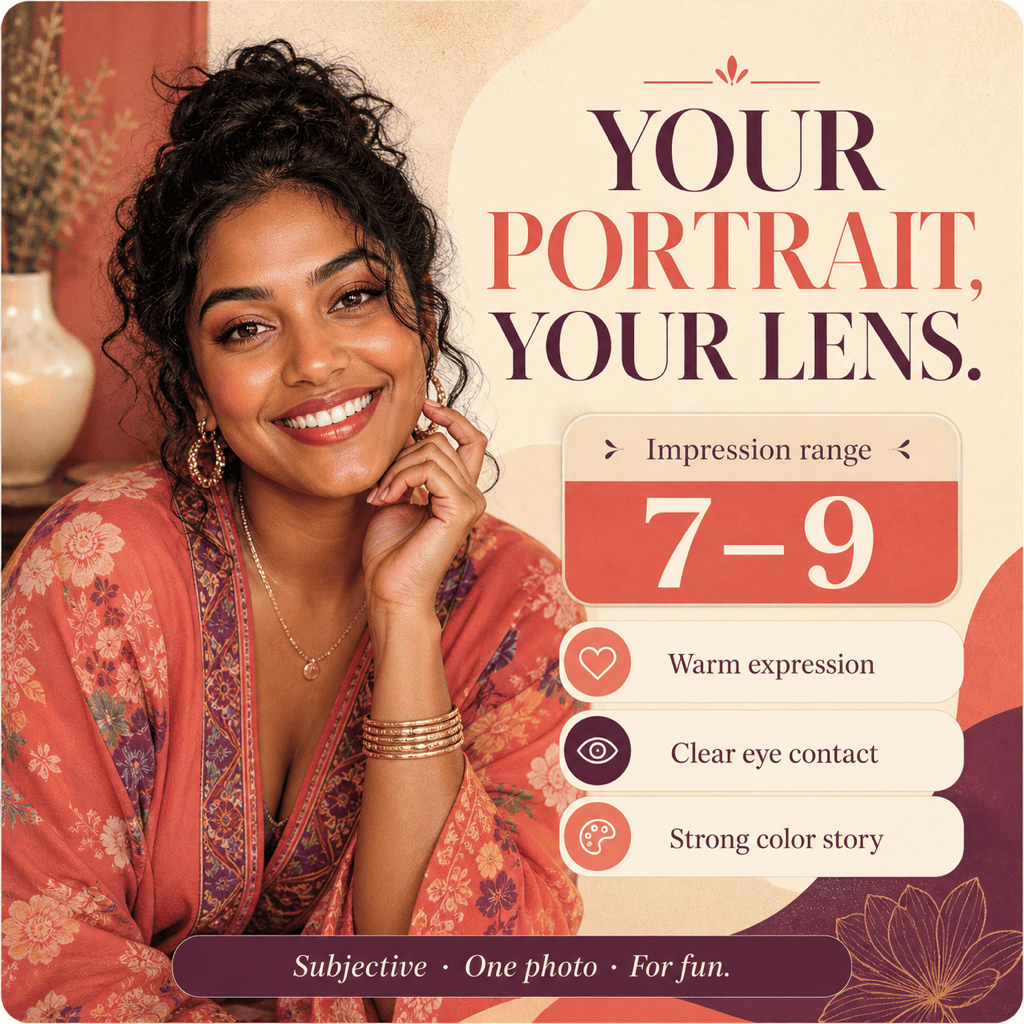
Convert your portrait impression into an editable card with a score range, selected lens, positive observations, and photo notes. Change type, color, hierarchy, and crop through Chat Edit without rebuilding the face.
Keep the Result Light and Consent-Aware
Start with free AI credits after signup and export without a watermark. Keep the result private if it feels unhelpful, avoid repeated score chasing, and share another person’s portrait or result only with permission.
A Better Prompt for a Subjective AI Beauty Score
- Define the Purpose: Say whether you are choosing a profile photo, exploring a style, or satisfying curiosity so the answer is tailored to a real job.
- Separate Face from Photography: Ask for two lists: visible portrait strengths and changeable image factors such as light, angle, expression, crop, and background.
- Avoid False Precision: Prefer a broad range or descriptive profile over a decimal score. The output reflects a model and one image, not a scientific measurement of beauty.
- Set Respectful Boundaries: Specify adults only, permission to process the photo, neutral wording, no insulting labels, and no health, identity, personality, relationship, or employment conclusions.
AI Beauty Test Prompts for Different Portrait Goals
Supportive Selfie Check: Review my authorized adult selfie using a natural, friendly portrait lens. Start with three visible strengths, give a broad for-fun impression range, and explain which parts of the result come from lighting, expression, angle, and crop. No insults or personal-worth judgments.
Choose a Profile Photo: Compare my two adult portraits and tell me which one better communicates approachable confidence. Discuss eye contact, expression, clarity, background, color, and framing; do not rank my face or predict dating, hiring, or social outcomes.
Lighting Experiment: Analyze two photos of the same consenting adult taken minutes apart, one in window light and one under overhead light. Explain how shadow placement and color cast change the beauty-test result, then recommend a simple retake setup without changing facial features.
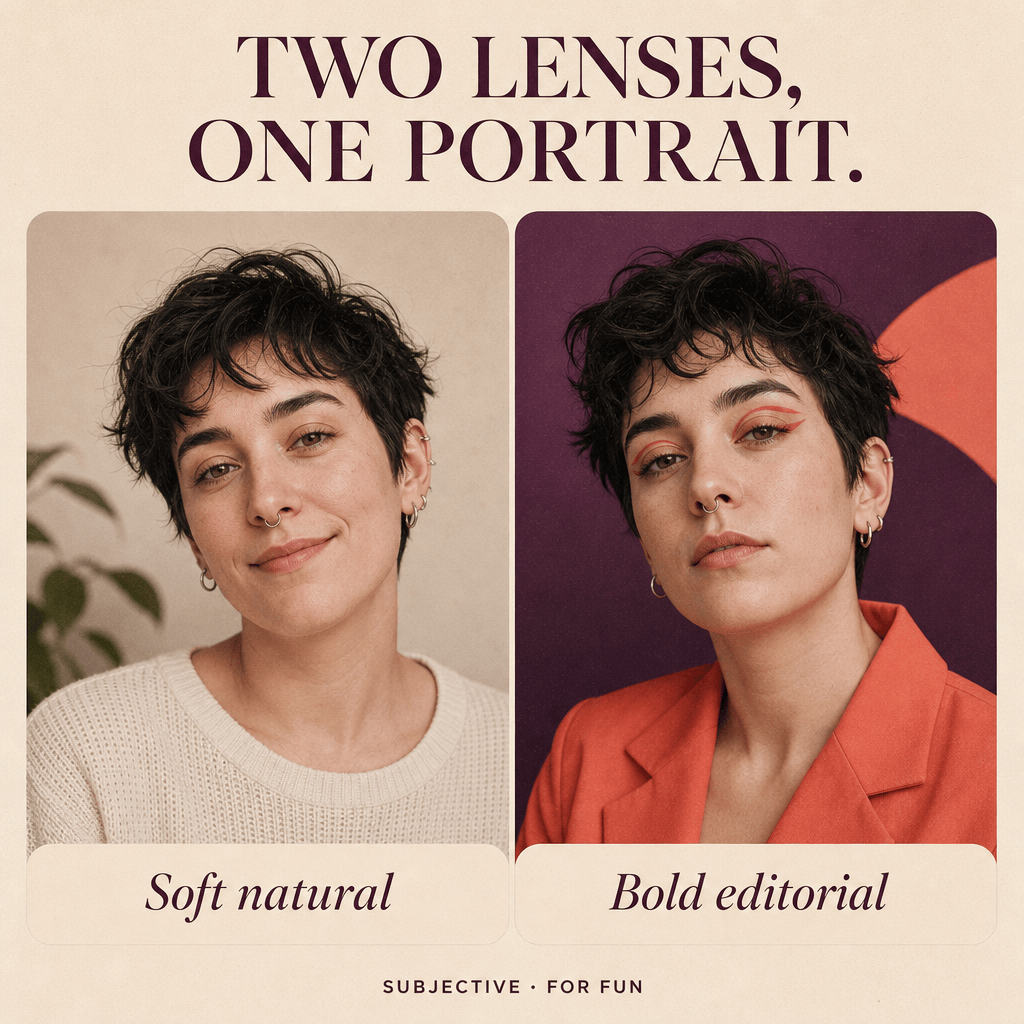
Style Mood Test: Read this adult portrait through two clearly named lenses: soft natural and bold editorial. Describe how hair, makeup, clothing color, and background support each mood. Keep both interpretations subjective and avoid recommending cosmetic or medical procedures.
Unfiltered Portrait Feedback: Review this clear adult photo with no beauty filter. Give strengths-first feedback on expression, presence, balance, and photo quality, followed by three reversible improvements to light, crop, color, or background. Do not suggest reshaping the face or hiding distinctive features.
Shareable Portrait-Impression Card: Create a square result card from my adult portrait. Include a broad for-fun score range, the chosen editorial lens, three positive observations, and two photo notes. Use kind language, readable type, and a prominent disclaimer that the result is subjective and based on one image.